

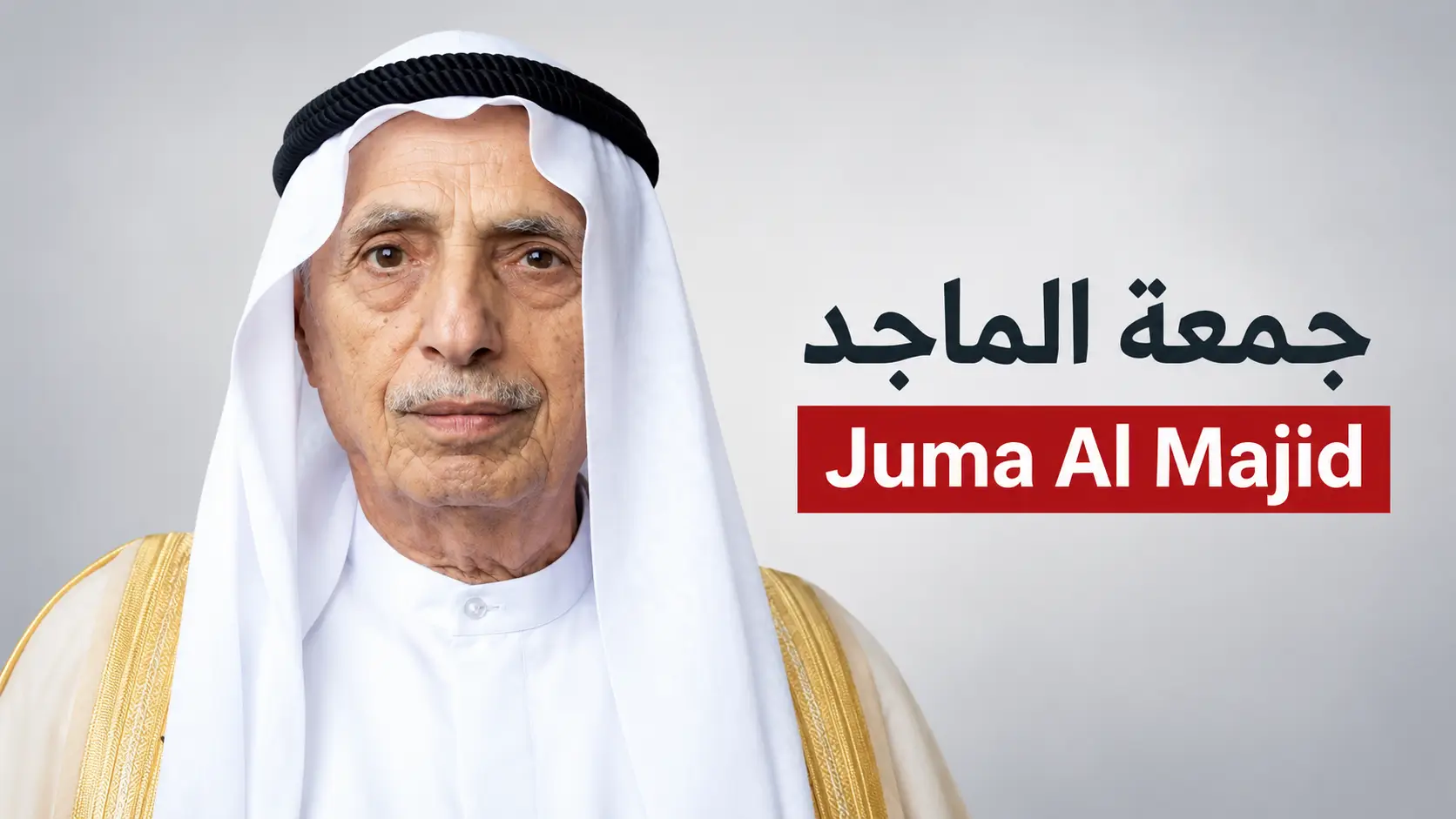

Juma Al Majid is an Emirati businessman and philanthropist who began with a small trading venture and went on to establish one of Dubai’s most established business groups. Born in 1930, Juma Al Majid entered the world of commerce at a young age and founded his first company in 1950. Over the subsequent decades, his business operations expanded to encompass sectors such as automotive distribution, consumer goods, industrial equipment, real estate, travel, and investment.
However, business is merely one part of his story. Al Majid has provided financial support for educational initiatives, contributed to humanitarian welfare efforts, and invested in the preservation of Arab and Islamic heritage. Schools, ‘Al Wasl University,’ and the ‘Juma Al Majid Center for Culture and Heritage’ reflect his long-standing commitment to extending access to education and knowledge to as many people as possible.
Who Is Juma Al Majid?
Juma Al Majid is an Emirati businessman and philanthropist who founded the ‘Juma Al Majid Holding Group‘ in Dubai in 1950. He built his business through trade, distribution agreements, and partnerships with international manufacturers, and gradually expanded it into various other industries.
His career began at a time when Dubai was transforming from a regional trading port into a major commercial hub. Al Majid responded to the market’s evolving needs by introducing new products, building relationships with suppliers, and expanding into sectors beyond his original trading business.
He also dedicated significant resources to education, the preservation of cultural heritage, and philanthropic endeavors. The honors he received include the ‘King Faisal Award for Service to Islam’ in 1999, recognition as a ‘UNHCR Humanitarian Champion’ in 2016, and the ‘Islamic Personality of the Year’ award in 2019.
Must Explore: Sheikh Khalifa bin Zayed Al Nahyan
Early Life and Family Background
Birthplace and Childhood
Juma Al Majid was born in 1930 in the Shindagha area of Dubai, which is now part of the United Arab Emirates. During his childhood, many local families relied on pearling, fishing, maritime trade, and the exchange of goods between ports in the Gulf.
His father, Majid bin Abdullah Quraiban, worked as a pearl diver. Al-Majid would accompany him on arduous journeys, during which he witnessed the immense hard work and toil required by these traditional sea-based livelihoods. In later accounts, he spoke of the patience and perseverance that these experiences had instilled in him.
The pearl trade also faced mounting pressure as cultured pearls entered the market. Families that relied on diving needed other ways to earn a living, and trade offered a potential path.
Against this backdrop, Al-Majid entered the business world. He gained his initial commercial experience not through years of formal education, but by working, observing, and engaging in transactions with other merchants.
Family and Early Influences
Al-Majid grew up in a family connected to Dubai’s business community. His mother, Aisha Majid Al Ghurair, encouraged education; however, due to family circumstances, he had to enter the workforce at a young age.
His maternal uncle, Ahmed Majid Al Ghurair, played a significant role in his early career. During his youth, Al Majid worked at his uncle’s trading shop in Deira, where he handled the buying, selling, and management of goods such as textiles, rice, and other everyday items.
This shop gave him the opportunity to observe, at close quarters, how local merchants operated. He came to understand the importance of retaining customers, managing payments, and taking business relationships seriously. These lessons proved particularly useful when he began running his own shop.
Education and Early Learning
Al-Majeed received his early education in traditional learning centers known as ‘kuttab’ (plural: *katatib*). His curriculum included reading, writing, the Holy Quran, the Arabic language, and religious subjects.
He did not pursue a university education before entering the business world. Most of his understanding of commercial affairs was acquired by working alongside experienced merchants, observing their negotiation styles, and learning from day-to-day business transactions.
His experience also showed him how difficult it could be for students and researchers to find books and educational resources. That concern later influenced his work in education and cultural preservation.
He went on to support institutions that offered learning opportunities and helped preserve books, manuscripts, and other written materials for future generations.
How Juma Al Majid Started His Business Career
Working in His Uncle’s Shop
At around 15, Al Majid began helping his uncle at a wholesale trading shop in Deira. He dealt with customers, helped sell goods, assisted with deliveries, and collected payments from other merchants.
The work exposed him to the practical side of trade. He learned how merchants handled credit, kept stock moving, and maintained relationships in a market where trust often mattered as much as the goods being sold.
His uncle later allowed him to run a small independent shop. That step placed him in charge of the daily decisions involved in buying and selling, giving him a chance to put his experience into practice.
His First Shop and Initial Capital
Published accounts of Al-Majid’s early life indicate that in 1947, at the age of approximately 17, he opened his own textile shop with a capital of about 700 rupees. Before the United Arab Emirates (UAE) introduced its own currency, the rupee was the medium of exchange in the ‘Trucial States.’
Since the business was small, he had to manage his capital with great care. He needed to select merchandise that customers would actually buy, ensure the smooth operation of the shop, and build enough trust among people to encourage them to return for future purchases.
Accounts of his early career put the shop’s first-year profit at around 2,000 rupees. For a business that began with limited capital, this provided a useful starting point for future expansion.
Al Majid did not build his business overnight. He started with a modest operation, learned how the market worked, and used that experience to pursue larger opportunities. In 1950, he established his first company, which became the foundation for his later business interests.
Trading Between Dubai, Kuwait and Bahrain
Al Majid later worked with Mohammad Al Qaz, a trader who brought goods to Dubai from Kuwait and Bahrain. Their business relationship introduced him to a wider regional trading network.
In 1956, Al Qaz invited him on trading trips to Kuwait. Published accounts describe the pair selling tobacco and Omani dried lime in Kuwait and Bahrain before returning to Dubai with fabrics and watches sourced from Switzerland and France.
The trips gave Al Majid first-hand experience of buying goods in one market and selling them in another. He could see how demand differed from place to place and how relationships with overseas suppliers opened up new opportunities.
These journeys formed an important part of his development as a trader. They also helped him build the commercial connections that supported his later expansion.
Juma Al Majid Holding Group
Establishment in 1950
Al Majid established his first company in 1950. Starting as a trading enterprise, the business gradually expanded, incorporating new products, distribution agreements, and investments in other sectors.
Dubai’s growing commercial ties created opportunities for local businesses to represent international manufacturers. Al Majid forged relationships with suppliers who sought to reach consumers in the United Arab Emirates and the wider region.
Over time, the group moved beyond its original trading activities. Automotive products, consumer goods, industrial equipment, contracting, real estate and travel became part of its wider portfolio.
Major Business Milestones
The group’s official history records the following developments:
| Year | Business milestone |
| 1950 | Juma Al Majid established his first company. |
| 1958 | The Tyres and Batteries division was established, with a Yokohama Tyres distribution agreement in the UAE. |
| 1962 | Gulf Trading & Refrigerating Co. LLC, known as Gulfco, was established. |
| 1964 | Gulfco became an exclusive distributor for selected S. C. Johnson home and personal care brands in the UAE. |
| 1965 | Gulfco signed a distribution agreement involving Nestlé’s Perrier and Vittel products. |
| 1967 | General Navigation & Commerce Co. LLC (GENAVCO) was established to supply commercial vehicles and industrial equipment. |
| 1977 | Al Majid Ellis was established, later becoming Al Arabia for Safety & Security LLC. |
| 1981 | Al Majid Travel was established. |
| 1982 | GENAVCO entered the commercial vehicle market through an Isuzu distribution agreement. |
| 1983 | Juma Al Majid Est. entered the UAE automotive market through a Hyundai agreement. |
| 1984 | Al Arabia for Technical Supplies & Contracts signed a Trane air-conditioning distribution agreement. |
| 1986 | Al Arabia for Elevators & Moving Systems was established. |
| 1988 | Al Majid Motors was established to represent Kia in the UAE. |
| 1989 | The Juma Al Majid Center for Culture and Heritage was established. |
| 1990 | Sky Line Travel, Tourism & Shipping LLC was established. |
| 1997 | Al Majid Property was established. |
| 1999 | Al Majid Investment Co. LLC was established. |
The dates show how the business grew from trading into a group with several specialised companies. Each new division added products or services for a different market, while distribution agreements connected the business with manufacturers outside the UAE.
The General Electric Opportunity
One episode from Al-Majeed’s business career relates to his decision to enter the air-conditioning market using ‘General Electric’ products.
During a visit to Bahrain in the 1960s, he spotted ‘General Electric’ refrigerators in a showroom. According to an account in business history, he obtained the supplier’s contact details and subsequently arranged to purchase 200 air conditioners at a discounted price from a ‘General Electric’ dealer in Lebanon.
Selling the units proved harder than expected. Reliable electricity was not yet widely available in the UAE, which limited demand for electrical appliances. Reports say it took about two years to sell the full batch.
The experience shows the difficulty of judging a market that has not yet developed the infrastructure needed to support a product. Al Majid saw the potential for air conditioning, but customers could not adopt it as quickly as he had hoped.
The group later handled home appliances from brands including GE and Gibson. The earlier deal remains a useful example of the risks involved in entering a developing market and waiting for demand to catch up.
Gold Trading and International Expansion
Al-Majid also participated in the gold trade, through which Dubai was connected to markets in the United Kingdom, Switzerland, and India. This trade linked local merchants with buyers and suppliers abroad—a period during which Dubai was consolidating its position as a regional commercial hub.
The gold trade relied on reputation and trustworthy business relationships. In his interviews, Al-Majid recounted how overseas partners placed their trust in Dubai’s merchants when finalizing transactions.
The formation of the UAE in 1971 brought further changes to the country’s commercial environment. Infrastructure development and construction created demand for vehicles, equipment, technical supplies, and other products.
The group expanded into these areas and added businesses in travel, property, and investment. This gave it a wider range of commercial activities instead of leaving it dependent on a single product or market.
What Does Juma Al Majid Holding Group Do?
The group operates across five principal business sectors.
Commercial: The commercial businesses cover areas such as automotive distribution, consumer products, tyres, batteries and industrial equipment. Partnerships with international manufacturers have played an important role in this part of the group.
Contracting and services: These businesses supply equipment and services for construction, air conditioning, elevators, building maintenance and safety systems.
Real estate: Property forms another part of the group’s portfolio. Al Majid Property was established in 1997.
Travel and tourism: The group entered the travel sector through Al Majid Travel in 1981 and later developed additional travel, tourism and shipping activities.
Investment: Al Majid Investment Co. LLC was established in 1999, adding investment activities to the group’s business interests.
Together, these sectors reflect the expansion of a company that began with small-scale trading and gradually entered a range of commercial markets.
Must Explore: Sheikh Abdullah bin Zayed Al Nahyan
Hyundai, Kia and Other Partnerships
Vehicle distribution became a significant part of the Group’s activities. In 1983, Juma Al Majid Establishment entered into an agreement with Hyundai Motor Company to introduce Hyundai vehicles to the United Arab Emirates.
Divisions for spare parts and servicing were also established as part of this business. These services provided post-purchase support to vehicle buyers and assisted the company in meeting the operational requirements associated with vehicle distribution.
Al Majid Motors was established in 1988 to represent Kia in the UAE. Other partnerships recorded in the group’s history include Yokohama Tyres, Isuzu, Trane and manufacturers of industrial equipment.
These agreements helped the group broaden its product range and establish links between international brands and customers in the UAE.
Juma Al Majid Building and Group Head Office
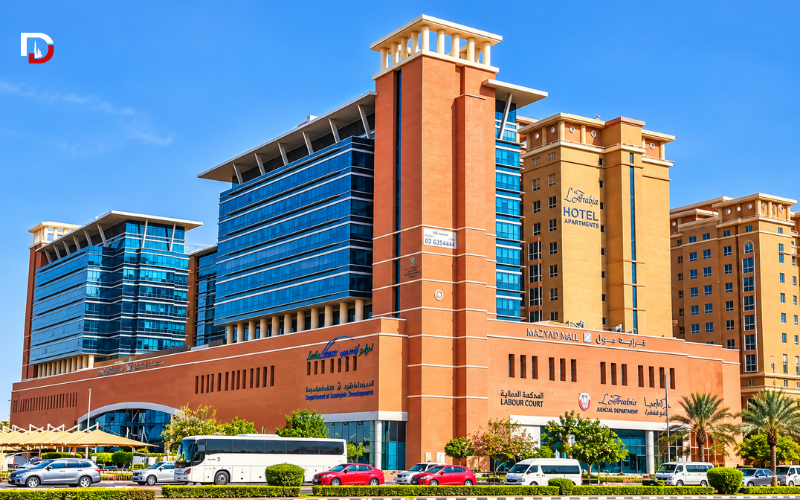
Names such as ‘Juma Al Majid Building’, ‘Juma Al Majid Group Head Office’, and ‘Juma Al Majid Tower’ do not necessarily refer to the same building or property. Anyone searching for an office or a building should verify the specific name and address, rather than assuming these terms are interchangeable.
Juma Al Majid Group Head Office
The group’s official contact page lists its headquarters in Hor Al Anz, Dubai, United Arab Emirates. Anyone planning a visit should check the website for the latest contact details and directions.
Juma Al Majid Building and Tower
A separate property listing associates Al Majid Property with the Al-Mateena Building in Deira, Dubai. The listing locates the building opposite Reef Mall and near Ansar Gallery on Salah Al Din Road.
The same listing mentions the Juma Al Majid Residential Tower in Al Nahda, Sharjah, located opposite Sahara Centre. These references pertain to distinct properties and should not be confused with the holding group’s corporate headquarters.
Property details can change, and older listings may no longer reflect current arrangements. Confirm the address with the relevant property or business before travelling or publishing it as a current location.
Philanthropy and Charity Work
Establishing Schools in Dubai
Education became a central focus of Al-Majid’s philanthropic endeavors. In the early 1950s, he—along with other prominent philanthropists in Dubai, including Humaid Al-Tayer, Abdullah Al-Ghurair, and Nasser Lootah began efforts to establish secondary schools.
With the approval of Dubai’s leadership, the group raised funds for these educational institutions. These efforts led to the establishment of the Jamal Abdul Nasser School for boys and the Amna Secondary School for girls.
At the time, access to formal education remained limited for many families. The schools helped address that need and showed how private donors could contribute to the development of local education.
Al Majid also wanted Dubai to have a national library. His interest in books and access to learning later found expression in his support for educational institutions and cultural collections.
National Charity School
In 1983, Al-Majid established private charitable schools to provide free education to students whose families could not afford to pay tuition fees. This initiative catered to underprivileged children as well as students from expatriate families who required access to educational facilities.
The ‘National Charity School’ became a key component of this endeavor. Rather than limiting his support to mere individual donations, Al-Majid helped establish an institution capable of providing education on a sustainable, long-term basis.
The King Faisal Prize’s 1999 biography recorded thousands of students benefiting from his educational initiatives. Those figures describe the situation at the time of the award and should not be presented as current enrolment numbers.
Beit Al Khair Society and Humanitarian Support
In 1990, Al-Majid, alongside other philanthropists, helped establish the Bait Al Khair Society. This organization supports those in need through charitable aid and community programs.
Its humanitarian efforts have extended to vulnerable families, education, and broader social causes. In March 2016, the UNHCR recognized him as a “Humanitarian Champion” for his contributions to humanitarian work.
This recognition added to his public record beyond business. His charitable activities have included both direct assistance and support for institutions intended to serve communities over the long term.
Juma Al Majid Center for Culture and Heritage
In 1989, Al-Majid established the ‘Juma Al-Majid Center for Culture and Heritage’. This center works toward the preservation of written heritage and makes books, manuscripts, and historical documents accessible to researchers.
Its collection encompasses a variety of subjects, including Arabic literature, Islamic studies, history, and other scholarly fields. The center also supports research, publications, lectures, and cultural programs.
Access to rare books and manuscripts can be difficult for researchers, particularly when materials are scarce or expensive. The centre helps address this problem by preserving written works and providing opportunities for scholars to consult them.
Manuscripts, Research and Cultural Preservation
‘Al-Majeed’s’ interest in books shaped the work of this center. Its role is not limited merely to preserving material; rather, it also aims to assist researchers in utilizing historical and scholarly resources.
This collection—which comprises over half a million titles, thousands of original ancient manuscripts, and various other research materials—is mentioned in a biographical account published in connection with the ‘King Faisal Prize’ in 1999. The account also notes the existence of exchange programs with more than 300 cultural and educational institutions.
These numbers belong to the 1999 account and should not be treated as verified current collection statistics. They nevertheless provide a historical indication of the centre’s scale at that time.
The centre remains a key part of Al Majid’s cultural legacy because it connects his personal interest in learning with the preservation and study of written heritage.
College of Islamic and Arabic Studies and Al Wasl University
Al Majid founded the College of Islamic and Arabic Studies in 1987 to widen access to higher education. The institution focused on Islamic and Arabic subjects and offered educational opportunities to students who might otherwise have faced financial barriers.
The college later developed into Al Wasl University. Its history reflects Al Majid’s interest in education, particularly in the Arabic language and Islamic scholarship.
The King Faisal Prize biography published in 1999 reported more than 2,000 students at the college at that time. This is a historical figure, not a current enrolment count for Al Wasl University.
His education-related work also included scholarships, adult education, and efforts to reduce illiteracy. Published biographical accounts have also linked his charitable activities with support for schools and education in other Muslim communities.
Leadership Roles and Business Philosophy
Al Majid’s work was not limited merely to the management of his own companies. His official profile, released by the group, mentions several public and business roles—including Chairman of the Dubai Economic Council, Vice Chairman of the Central Bank of the United Arab Emirates, Vice Chairman of Emirates Bank International, and Director of the Dubai Chamber of Commerce and Industry.
Published biographies also record his involvement with educational and cultural bodies, including UAE University and an advisory committee associated with Harvard University’s Center for Middle Eastern Studies. Specific titles and dates should be checked against the institutions’ own records before they are described as current or assigned to a particular period.
The group identifies customer service, honesty, integrity, and social responsibility as principles associated with its founder. These values also appear in the way his business career combined commercial expansion with support for education and community initiatives.
His experience with the GE air-conditioner deal shows that commercial decisions did not always deliver quick results. Recognising a potential market was only one part of the challenge; customers also needed the infrastructure to use the products.
Across his career, Al Majid built relationships with suppliers, entered new sectors and expanded gradually. His business activities developed alongside his work in education, charity and cultural preservation.
Awards and Major Achievements
Al Majid has received recognition for his contributions to education, culture, business and humanitarian work.
Notable honours include:
- Sultan Bin Ali Al Owais Cultural Personality Award (1992): Recognition for his contribution to culture.
- Dubai Quality Award — Businessman of the Year (1994): Recognition reported by the Sultan Bin Ali Al Owais Cultural Foundation.
- King Faisal Prize for Service to Islam (1999): Awarded for contributions to education, support for people in need, and cultural initiatives.
- International Personality Award for Culture and Heritage Service (2000): Recognition for cultural and heritage work.
- Cultural Personality of the Year at the Qareen Cultural Festival (2005): Listed in the official founder biography.
- Sultan Bin Ali Al Owais Cultural Award for Cultural and Scientific Achievement (2006–2007): Recognition for cultural and scientific contributions.
- Taryam Omran Cultural Award for Enterprise (2007): Listed in the group’s official founder profile.
- Gibran Khalil Gibran Award for Global Responsibility (2010): Presented by the Arab American Institute.
- Khalifa International Award for Date Palm and Agricultural Innovation recognition (2011): Listed in the group’s official founder biography.
- Makhdoum Qoli Faraghi Medal (2014): Recognition associated with preserving and promoting Turkmenistan’s heritage and culture.
- GCC Award for Excellence in Philanthropy (2015): Recognition for philanthropic contributions.
- UAE Pioneers Award (2015): Listed among his official honours.
- UNHCR Humanitarian Champion (2016): Recognition for humanitarian and charitable activities.
- Islamic Personality of the Year (2019): Awarded through the Dubai International Holy Quran Award.
- Medal of Culture and Creativity (2024): Listed in the official founder profile.
- Mohammed bin Rashid Al Maktoum Knowledge Award (2024): Listed in the official founder profile.
The group’s official founder biography provides the main reference for these honours. Award names can appear differently in English translations, so the exact title and year should be checked against each awarding institution’s records before publication.
Juma Al Majid’s Family and Legacy
Al Majid’s family is connected to the business he established and its continuing development. Published family-business histories identify his son, Khalid Juma Al Majid, as a senior figure in the group.
Those accounts also report that Al Majid married in the 1950s and had a daughter, Hana, in 1956, followed by his son Khalid in 1964. Include these personal details only where they are supported by reliable public sources and relevant to the article.
His legacy extends beyond the family business. The holding group continues to operate across several industries, while the schools, university and cultural centre associated with his work reflect his long-standing interest in education and public service.
These institutions form an important part of his public record. They show how his work extended from building a commercial organisation to supporting education, humanitarian assistance and cultural preservation.
Juma Al Majid Net Worth
A reliable, independently verified estimate of Juma Al Majid’s personal net worth was not established from the sources reviewed for this biography. The value of the Juma Al Majid Holding Group should not be treated as a direct measure of his personal wealth. Company revenues, property holdings and business activities do not establish an individual’s net worth on their own.
Without a credible estimate that identifies its source, methodology and publication date, a specific figure could give readers a misleading impression. His commercial record is easier to document through the group’s history, its business sectors and the partnerships it developed over several decades.
Must Explore: Sheikh Hamdan Biography
Conclusion
Juma Al Majid began his career with a small trading shop in Dubai, eventually going on to establish a diversified business group. His early experiences involving the pearl-diving community, local trade, and regional commerce played a pivotal role in shaping his entrepreneurial vision, particularly during a period when Dubai’s economy was undergoing a transformation.
The scope of the group he founded expanded to encompass sectors such as automotive distribution, consumer products, industrial equipment, real estate, travel, and investment. The history of this group also reflects the various opportunities and challenges encountered while introducing new products and establishing markets within a developing nation.
Al-Majid’s work in the fields of education, social welfare, and the preservation of cultural heritage constitutes another significant part of his public legacy. Through schools, higher education initiatives, the Beit Al-Khair Society, and the Juma Al-Majid Center for Culture and Heritage, he supported institutions established to serve students, researchers, and society at large.
His story brings together two facets of his career: the development of a business group in the United Arab Emirates, and his long-standing commitment to education and public service.
Frequently Asked Questions
Who is Juma Al Majid?
Juma Al Majid is an Emirati businessman and philanthropist who established his first company in Dubai in 1950. He founded the Juma Al Majid Holding Group and is also known for supporting education, humanitarian work, and cultural heritage.
When was Juma Al Majid born?
He was born in 1930 in Shindagha, Dubai, United Arab Emirates.
How did Juma Al Majid start his business career?
He began working in his uncle’s trading shop as a teenager before running an independent fabric shop. Published accounts say he started with approximately 700 rupees in capital and made around 2,000 rupees in profit during his first year.
What is Juma Al Majid Holding Group?
It is a diversified UAE business group that traces its origins to 1950. Its principal sectors include commercial activities, contracting and services, real estate, travel and tourism, and investment.
What brands has the group represented?
The group’s documented business history includes partnerships involving Hyundai, Kia, Yokohama Tyres, Isuzu, GE, and other international suppliers. The products and brands represented have varied by business unit and period.
What is Juma Al Majid known for besides business?
He is known for supporting education, charitable initiatives, and cultural preservation. His work includes the National Charity School, the College of Islamic and Arabic Studies, the Juma Al Majid Center for Culture and Heritage, and support for Beit Al Khair Society.
Where is Juma Al Majid Group’s head office?
The group’s official website lists its headquarters in Hor Al Anz, Dubai. Visitors should check the official contact page for current directions and contact information before travelling.
Is Juma Al Majid Building the same as Juma Al Majid Tower?
Not necessarily. Published property information has referred to Al Muteena Building in Deira, Dubai, and Juma Al Majid Residential Tower in Al Nahda, Sharjah. Treat them as separate properties unless an authoritative source confirms otherwise.
What awards has Juma Al Majid received?
His honours include the King Faisal Prize for Service to Islam in 1999, UNHCR Humanitarian Champion recognition in 2016, and the Islamic Personality of the Year award in 2019. His official founder profile also lists honours from 2024.
What is Juma Al Majid’s net worth?
A dependable current estimate of his personal net worth was not verified for this article. The value of the holding group should not be used as a substitute for a verified estimate of his personal wealth.