






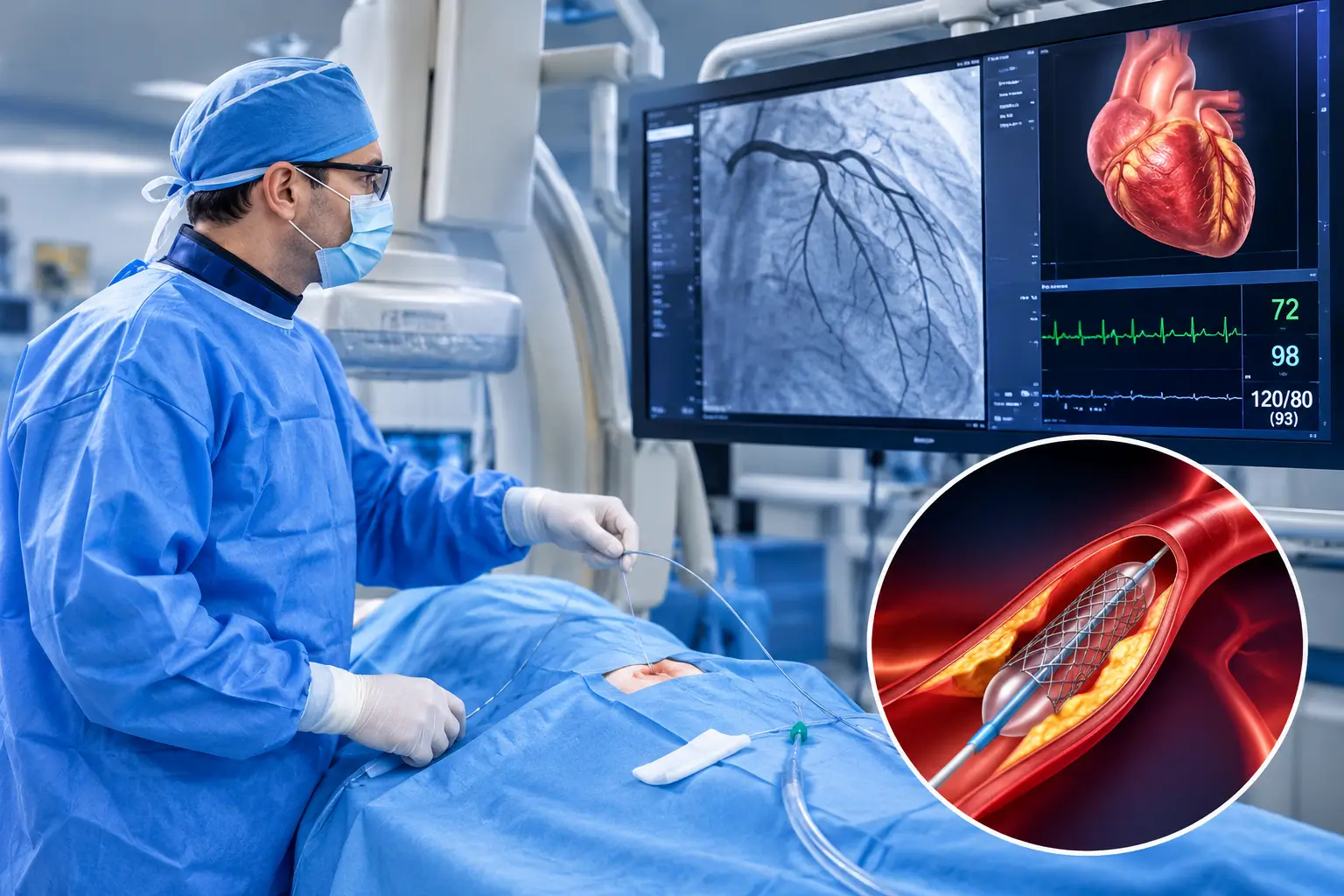
Interventional cardiology has changed the way many heart conditions are treated. Instead of relying solely on open surgery, cardiologists can use thin tubes called catheters to reach the heart and blood vessels through a small access point. These procedures can improve blood flow, treat narrowed valves, and address certain structural heart problems with less disruption to surrounding tissues.
The choice of procedure depends on the heart condition, its severity, the patient’s symptoms, and the results of diagnostic tests. A detailed cardiac assessment helps determine whether a catheter-based treatment is appropriate.
What Is Interventional Cardiology?
Interventional cardiology focuses on procedures performed through blood vessels to diagnose and treat cardiovascular conditions. The cardiologist guides specialised instruments towards the affected area using imaging during the procedure.
Common interventions include:
- Coronary angioplasty and stenting
- Balloon valvuloplasty
- Coronary angiography
- Treatment of selected structural heart conditions
- Catheter-based procedures for certain valve disorders
- Procedures to restore blood flow through narrowed arteries
These treatments may be considered when medication alone is not sufficient or when a structural or blood-flow problem requires direct intervention.
When Is an Interventional Procedure Considered?
Not every heart condition requires an invasive procedure. The decision is based on the patient’s symptoms, test results, and overall cardiovascular health.
An intervention may be considered when there is:
- Significant narrowing of a coronary artery
- Reduced blood flow to the heart muscle
- Severe narrowing of a heart valve
- Symptoms that continue despite medical treatment
- A structural heart problem suitable for catheter-based treatment
Before proceeding, the cardiology team reviews the potential benefits and risks and discusses suitable treatment options with the patient.
Understanding Balloon Valvuloplasty
Balloon valvuloplasty is a catheter-based procedure used to widen a narrowed heart valve. It is most commonly associated with stenosis, where thickened or restricted valve leaflets make it difficult for blood to pass through the valve.
During the procedure, a thin catheter carrying a deflated balloon is guided towards the affected valve. Once correctly positioned, the balloon is inflated for a short period to separate or stretch the narrowed valve opening. It is then deflated and removed.
The procedure aims to improve blood flow across the valve and reduce the pressure created by the narrowing.
Who May Benefit from Balloon Valvuloplasty?
Suitability depends on the type of valve affected, the degree of narrowing, the patient’s symptoms, and the condition of the valve.
Balloon valvuloplasty may be considered for selected patients with significant valve stenosis, particularly when the valve anatomy is suitable for the procedure.
A detailed echocardiogram and other cardiac investigations help the specialist understand the valve structure before treatment. In some cases, another intervention or surgical valve procedure may provide a more appropriate long-term solution.
What Happens During the Procedure?
The procedure is performed in a specialised cardiac catheterisation setting. The patient receives appropriate anaesthesia or sedation according to the procedure and clinical requirements.
A catheter is introduced through a blood vessel and carefully guided towards the heart. X-ray imaging and other monitoring techniques allow the cardiologist to see the catheter’s position throughout the procedure.
Once the balloon reaches the narrowed valve, it is inflated to widen the opening. The balloon is then deflated and removed, and the access site is treated to control bleeding.
Recovery After Balloon Valvuloplasty
Recovery depends on the patient’s overall health and the type of procedure performed. The medical team monitors the heart rhythm, blood pressure, and access site after the intervention.
Some patients may be able to return home after a period of observation, while others may need longer monitoring depending on their condition.
Follow-up appointments are important because valve narrowing can recur in some patients. Repeat echocardiography may be recommended to assess valve function and determine whether additional treatment is required.
Other Interventional Heart Treatments
Interventional cardiology also plays an important role in treating narrowed coronary arteries. During coronary angioplasty, a catheter is used to reach the affected artery. A balloon may be inflated to widen the narrowed section, and a stent may be placed to help maintain blood flow.
The same catheter-based approach is used for several other cardiovascular procedures, although the technique and equipment vary according to the condition being treated.
Patients seeking the best interventional heart treatment in Dubai should undergo a complete cardiac evaluation before choosing a procedure. The most suitable intervention depends on the patient’s anatomy, symptoms, test results, and overall health rather than on the procedure alone.
Why Specialist Assessment Matters
Interventional procedures require careful planning. Imaging tests such as echocardiography, coronary angiography, CT scans, or other investigations may be used to understand the condition before treatment.
The cardiologist also considers factors such as age, other medical conditions, previous cardiac procedures,s and the patient’s response to medication. This information helps determine whether an intervention is appropriate and which technique is most suitable.
Patients considering the best balloon valvuloplasty treatment in Dubai should discuss the expected benefits, possible complications, alternative treatments, ts and follow-up requirements with their cardiologist.
Follow-Up and Long-Term Cardiac Care
Treating the immediate heart problem is only one part of cardiovascular care. Patients may need medicines, repeat imaging, lifestyle changes and regular cardiology appointments after an intervention.
Controlling blood pressure, cholesterol and blood glucose can help protect cardiovascular health. Avoiding tobacco, maintaining an appropriate level of physical activity and following dietary advice may also form part of the long-term management plan.
Choosing a Cardiology Centre
Interventional cardiac care requires experienced specialists, appropriate imaging technology and facilities equipped to perform catheter-based procedures safely.
Aster Hospitals provides cardiac assessment, diagnostic investigations and interventional cardiology services based on individual clinical requirements. Patients are assessed before treatment to determine the most appropriate approach for their specific heart condition.
Also Explore: Al Awir Immigration Office
Frequently Asked Questions
Is balloon valvuloplasty the same as angioplasty?
No. Both procedures use a balloon catheter, but they treat different problems. Balloon valvuloplasty is used to widen a narrowed heart valve, while coronary angioplasty is performed to improve blood flow through a narrowed coronary artery.
How long does balloon valvuloplasty take?
The duration varies according to the valve being treated, the patient’s anatomy, and the complexity of the procedure. Your cardiologist can provide a more specific estimate after assessment.
Can valve narrowing return after balloon valvuloplasty?
Yes. In some patients, the valve can become narrowed again over time. Regular follow-up and echocardiography can help monitor valve function.
Is every patient with valve stenosis suitable for balloon valvuloplasty?
No. The condition of the valve, its anatomy, severity of narrowing, symptoms, and overall health all influence whether balloon valvuloplasty is appropriate.