



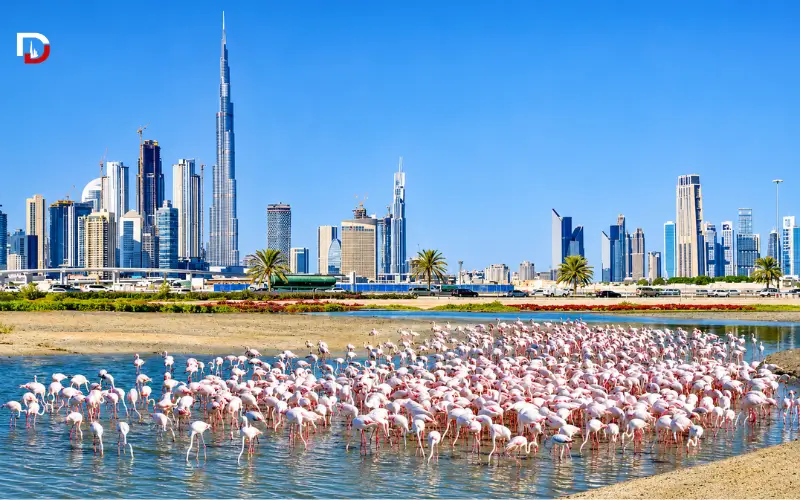

Ras Al Khor brings together two starkly different parts of Dubai. One is a protected wetland where flamingos and migratory birds gather against the backdrop of the Downtown skyline. The other is a bustling industrial district filled with warehouses, vehicle workshops, wholesale markets, and commercial businesses. Both fall under the name ‘Ras Al Khor’, yet they serve distinct purposes. This article covers their locations, transport links, amenities, nearby communities, and arrangements for visiting the wildlife sanctuary.
Where Is Ras Al Khor Dubai?
Ras Al Khor translates to “Head of the Creek” in Arabic. The name refers to the inland end of Dubai Creek, where the wetland area developed alongside the waterway. Today, the wildlife sanctuary sits east of Downtown Dubai, near the junction of Ras Al Khor Road (E44) and Dubai–Al Ain Road (E66). The industrial district extends southeast from the sanctuary, with access through Ras Al Khor Road and Sheikh Mohammed bin Zayed Road (E311).
People often use Ras Al Khor to describe three different places. Understanding the distinction helps visitors find the correct destination and prevents confusion when searching for addresses.
| Name | What it is | Who goes there |
| Ras Al Khor Wildlife Sanctuary | Protected wetland at the head of Dubai Creek and a Ramsar site | Birdwatchers, photographers, families and school groups |
| Ras Al Khor Industrial Area 1, 2 and 3 | Commercial and industrial district with warehouses, workshops, markets and staff accommodation | Traders, drivers, workers and shoppers |
| Al Aweer | Separate community on Dubai’s eastern side, near Emirates Road (E611) and Hatta Road (E44) | Residents, farmers and market traders |
‘Al Aweer‘ often causes some confusion because Dubai’s main fruit and vegetable market, commonly referred to as the ‘Al Aweer Market,‘ is actually located in ‘Ras Al Khor Industrial Area 3,’ which lies near the boundaries of ‘Al Aweer.’ People frequently use the names of both areas when referring to this market. There are no residential buildings within the wildlife sanctuary, whereas the industrial area contains a limited number of apartments and staff accommodations.
Other areas surrounding Ras Al Khor include Nad Al Hammar, Nad Al Sheba, Al Jaddaf, Dubai Creek Harbour, Dubai Festival City, International City, and Al Warqa’a. The road connectivity and close proximity between these areas make them significant for those who visit, work, or reside in or around them.
Ras Al Khor Location and Map
Tourists should search for the wildlife sanctuary and the industrial area separately on the map. These are two distinct locations; simply entering the general name “Ras Al Khor” might lead the driver to the wrong part of the area.
The wildlife sanctuary. Search for “Ras Al Khor Wildlife Sanctuary” on Google Maps. Visitors can also use the plus code 58RF+G32 to locate the sanctuary. Dubai Municipality identifies three birdwatching hides around the wetland, each with its own Makani number:
- Flamingo Hide: Makani 29772 87328. It stands on the western side of the sanctuary near the flamingo roost, with road access from E66. Drivers should follow the map pin carefully because the entrance to its parking lay-by does not have a prominent road sign.
- Mangrove Hide: Makani 31623 86559. This viewing point overlooks the mangrove habitat on the southern side and has access from Ras Al Khor Road.
- Lagoon Hide: Makani 30487 87923. Located near Al Jadaf, this hide provides views across the creek’s open water.
The industrial area. Ras Al Khor Industrial Area lies around 25.178°N, 55.349°E. Ras Al Khor Road and Sheikh Mohammed bin Zayed Road provide the main road connections, while Manama Street meets the latter within the district. Industrial Areas 1, 2 and 3 sit beside one another, with Marhaba Mall and the main produce markets concentrated in Area 3.
Before setting off, check your destination’s exact location on your map. A sign pointing toward a ‘sanctuary’ will not lead you to industrial zones, and an indication for an industrial area will not take you directly to birdwatching hides.
How to Reach Ras Al Khor
Ras Al Khor is connected to various parts of Dubai by road. The best route depends on whether you are heading to the wildlife sanctuary, the industrial area, or one of the markets located there.
By Car
Drivers can reach the wildlife sanctuary via Ras Al Khor Road (E44) or Dubai–Al Ain Road (E66). Designated parking areas are available for bird-watching visitors. Dubai Municipality has warned visitors against parking outside these approved areas, as unauthorized parking can result in heavy fines.
Access to the industrial area is available directly via Ras Al Khor Road and Sheikh Mohammed Bin Zayed Road (E311). These roads connect the area to other commercial and residential parts of Dubai. Drivers heading to a specific workshop, warehouse, or market should enter the precise address into their navigation app.
By Dubai Metro
There is no metro station near the wildlife sanctuary. Visit Dubai suggests traveling to Al Jadaf or Creek station on the Green Line and taking a taxi for the remainder of the journey. This is a practical option for visitors who prefer public transport but wish to avoid walking along the surrounding roads.
With the opening of the Dubai Metro’s ‘Blue Line,’ the industrial area will gain a new metro connection. The Roads and Transport Authority (RTA) has set September 9, 2029, as the date for its inauguration. The proposed route includes stations at Dubai Festival City, Dubai Creek Harbour, Ras Al Khor Industrial, and the Auto Market, from where it will extend toward International City. This line will also connect with the ‘Green Line’ at the ‘Creek’ station.
RTA’s target is to complete 30 per cent of construction by the end of 2026. Until the Blue Line begins passenger services, visitors and workers must use the existing transport network.

Also Explore: Creek Metro Station
By Bus or Taxi
RTA buses operate along several roads around Ras Al Khor, although no bus stop sits directly at the sanctuary entrance. Bus routes and stopping points can change, so check the latest journey information through the RTA website before travelling.
A taxi or ride-hailing service can cover the remaining distance from a nearby bus stop or metro station. Visitors heading to the industrial district should share the exact market, building or street name with the driver rather than using Ras Al Khor as the only destination.
Ras Al Khor Wildlife Sanctuary
Ras Al Khor Wildlife Sanctuary protects an important wetland at the inland end of Dubai Creek. Its landscape includes mangroves, mudflats, lagoons and salt flats, which provide feeding and resting grounds for different bird species.
The protected area covers approximately 6.2 square kilometres, according to commonly cited sanctuary information. Dubai Municipality’s protected-area listing gives a larger figure of 10.13 square kilometres for the reserve. A municipality statement from 2008 described the 6.2-square-kilometre wetland as being surrounded by a buffer zone, which helps explain why both figures appear in published information.
Dubai declared the area a protected site in 1998. In 2007, it became the first location in the UAE to receive listing under the Ramsar Convention, an international agreement that recognises wetlands of international importance.
Wildlife and Bird Species
The sanctuary supports a wide range of wildlife throughout the year. Dubai Municipality records 472 species in the protected area, including 201 bird species. Winter brings particularly large numbers of visiting birds, with seasonal counts reaching up to 25,000. Records also show that 24 species found in the sanctuary appear on the IUCN Red List of Threatened Species.
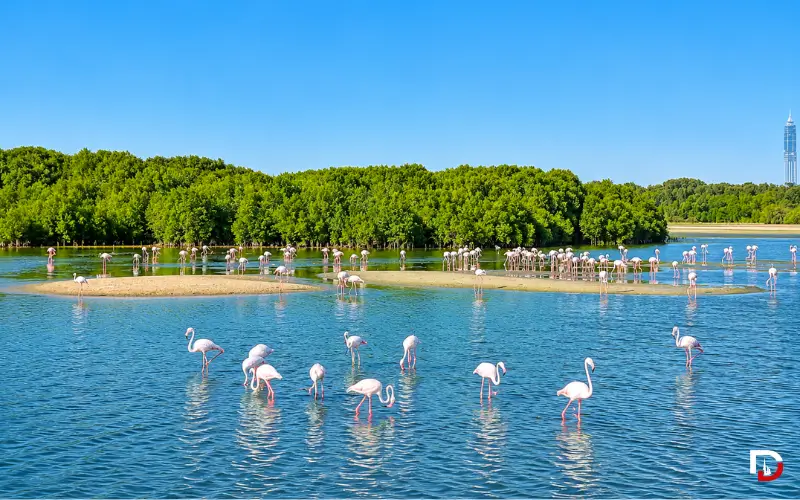
Greater flamingos remain the best-known residents of Ras Al Khor. Thousands use the wetland throughout the year, making the Flamingo Hide a popular stop for visitors and photographers. Other bird groups also depend on the sanctuary’s different feeding areas.
- Ducks: Mallards, pintails and common teals visit the wetland and feed around its shallow waters.
- Waders and shorebirds: Black-winged stilts, broad-billed sandpipers and Pacific golden plovers search for food across the mudflats.
- Herons, egrets and cormorants: Grey herons and great egrets often appear around the shallow sections of the lagoon.
- Raptors: Ospreys hunt over the water, while great spotted eagles and other birds of prey may appear during the winter migration season.
Dubai Municipality’s information about the Mangrove Hide also mentions snipes, shanks, Eurasian spoonbills and occasional winter sightings of storks. The wetland supports more than birds; its habitats also provide shelter for fish, crustaceans and small mammals.
Natural Habitats
Different habitats make Ras Al Khor suitable for a wide variety of wildlife. Mangroves provide shelter and feeding areas, while mudflats expose food sources that wading birds find during low tide. The lagoons offer open water for waterbirds, and salt flats, also known as sabkhas, support other forms of wetland life.
Reed beds and scrubland add further variety to the landscape. These habitats work together to support resident and migratory species, which is why birdwatchers can spot different types of wildlife during a single visit.
Birdwatching Hides
Dubai Municipality provides three designated viewing hides so visitors can observe wildlife without entering sensitive parts of the wetland. Each hide offers a different view of the sanctuary.
- Flamingo Hide: This is the main viewing point for people hoping to see greater flamingos. Its position near the flamingo roost makes it one of the most popular places for wildlife photography.
- Mangrove Hide: Visitors can look across the mangrove habitat and watch waders and other wetland birds. Dubai Municipality currently lists this hide as temporarily closed, with no confirmed reopening date.
- Lagoon Hide: This viewing point faces open creek water, where birdwatchers may spot waders, waterbirds and raptors.
Dubai Municipality’s visitor page, updated on 17 November 2026, identifies the Mangrove Hide as temporarily closed. Some birdwatching websites also reported wider access restrictions during construction work in 2025. Visitors should check the official Plan Your Visit page before leaving home because access arrangements can change.
Why the Sanctuary Matters
Ras Al Khor forms part of the East African–West Asian flyway, which migratory waterbirds use when travelling between Africa and Asia. Its position along this route makes the wetland an important resting and feeding area. BirdLife International also recognises the site as an Important Bird Area.
The sanctuary has a connection to Dubai’s early development as well. According to Dubai Municipality, its fish spawning grounds supported traditional fishing activities that contributed to the growth of early settlements in Deira, Shindagha and Bur Dubai during the 18th century.
Redevelopment Plans
Dubai Municipality awarded the first-phase contract for a major redevelopment project in June 2025. The programme has two phases, with the first phase costing approximately AED 100 million and covering around 6.4 square kilometres. Officials expected this phase to finish by the end of 2026, while the complete programme carries an estimated cost of AED 650 million.
The redevelopment plans include a 144 per cent increase in water-body area, 60 per cent more mangrove cover and approximately 10 hectares of additional mudflats. These changes aim to improve the wetland’s natural environment and provide better conditions for wildlife.
The later phase includes plans for a visitor centre, birdwatching towers, cafés, kiosks, educational facilities and walking and cycling trails. These facilities are part of the future development programme and should not be treated as currently available attractions. Dubai Municipality expects the completed sanctuary to welcome between 250,000 and 300,000 visitors annually. Visitors should check official updates before travelling, particularly while redevelopment work continues.
Ras Al Khor Wildlife Sanctuary Timings
Dubai Municipality publishes different visiting hours for the summer and winter seasons. The schedule allows visitors to plan their trips around changing daylight and weather conditions.
| Season | Months | Official visiting hours |
| Winter | October–March | 7:30 AM–5:30 PM |
| Summer | April–September | 6:00 AM–6:00 PM |
The published hours may change during Ramadan and public holidays. Visitors should check the latest information before travelling and confirm which birdwatching hides are open.
Entry to the sanctuary is free, and Visit Dubai confirms that visitors can use the bird hides without an admission charge. Individuals, families and photographers can visit during opening hours without arranging a general advance booking. However, walk-in registration is required, and security staff may ask visitors to show their Emirates ID.
Schools and universities can arrange free educational visits through Dubai Municipality’s online booking portal. Tour operators must make advance arrangements, while media companies need a No Objection Certificate (NOC) for commercial filming. The Book a Visit page explains the relevant requirements.
Things to Do in Ras Al Khor
Most visitor activities take place inside the wildlife sanctuary, while the industrial district offers a different experience through its markets and commercial businesses. People visiting the wetland can spend time observing birds, taking photographs, and learning about the area’s natural environment.
Watch flamingos. The Flamingo Hide gives visitors a close view of the greater flamingos that gather around the wetland. Winter usually brings larger numbers of birds, making this season particularly popular with wildlife enthusiasts.
Birdwatch and photograph wildlife. Visitors can observe different species from the designated hides without entering protected areas. Dubai Municipality recommends bringing binoculars, a camera, and a bird guide. The Downtown skyline also provides an interesting background for photographs of the wetland.
Learn about wetland conservation. Dubai Municipality organises free awareness programmes for schools and universities. Visitors who cannot attend in person can also use the municipality’s 360-degree virtual tour to view parts of the sanctuary online.
Visit the markets and shops. Ras Al Khor Industrial Area offers a completely different experience from the sanctuary. The Dubai Central Fruit and Vegetable Market and Bloom Market attract shoppers, traders and people interested in the area’s wholesale produce business.
Ras Al Khor Industrial Area
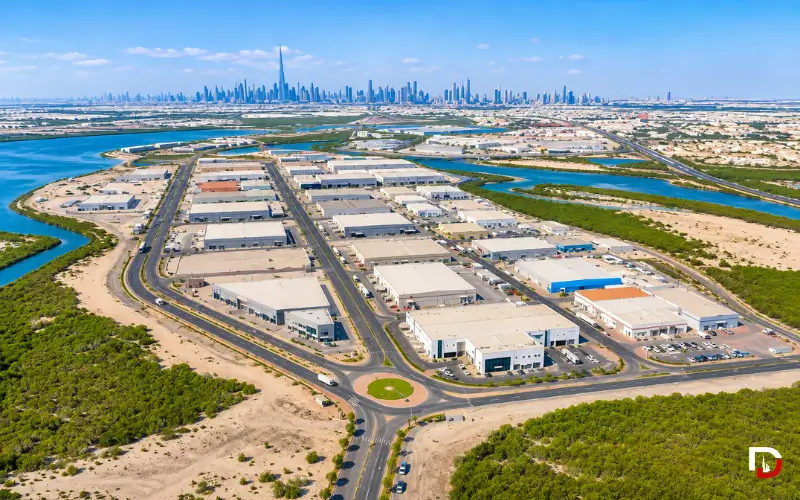
Ras Al Khor Industrial Area consists of three adjoining sections: Industrial Area 1, Industrial Area 2 and Industrial Area 3. Unlike the wildlife sanctuary, this is a working commercial district where vehicle businesses, warehouses, workshops and wholesale trading activities operate throughout the area.
Vehicle-related businesses have a strong presence, with spare-parts shops, repair garages, car washes and service centres spread across its streets. Warehouses used by construction and logistics companies also form an important part of the district’s commercial activity. Dubai Municipality’s used-car trading complex is another notable facility in the area.
The three industrial sections have similar commercial uses, but their facilities differ.
- Area 1 and Area 2: Property listings show a strong presence of warehouses, open yards, and logistics facilities. Industrial Area 2 also has Pakistani restaurants and cafeterias along its main roads.
- Area 3: This section combines warehouses and workshops with staff accommodation, smaller retail centres, clinics, Marhaba Mall and the main fruit and vegetable markets. A limited number of residential buildings, including Samari Residences, also operate here.
The district provides employment opportunities in vehicle trading, logistics, warehousing, wholesale food distribution and retail services. Bayut describes the area as mainly commercial, with only a limited supply of residential apartments.
Accommodation in Ras Al Khor Industrial Area generally consists of staff housing and smaller residential buildings used by people working nearby. Those looking for established residential communities with schools, parks and larger homes usually consider Nad Al Hamar, Nad Al Sheba or Dubai Creek Harbour instead.
Also Explore: Al Sajaa
Shopping Centres and Markets Near Ras Al Khor
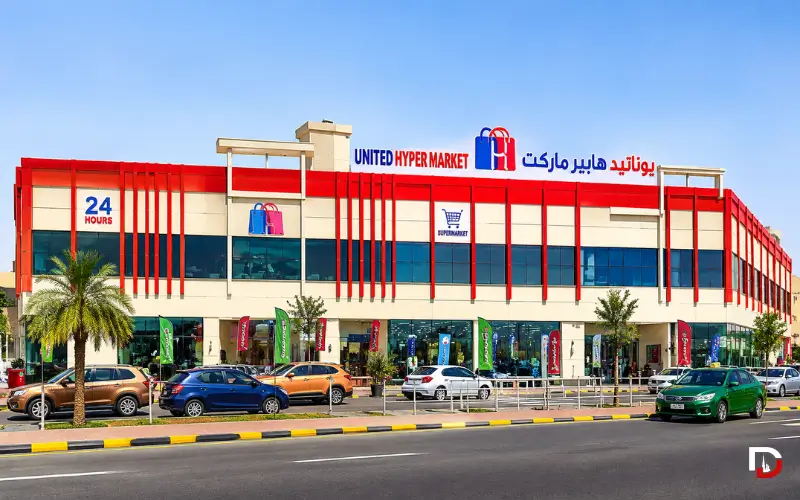
Shopping facilities in Ras Al Khor serve both local workers and people travelling to the area for wholesale purchases. Marhaba Mall, Dubai Central Fruit and Vegetable Market and Bloom Market are among the better-known destinations in Industrial Area 3.
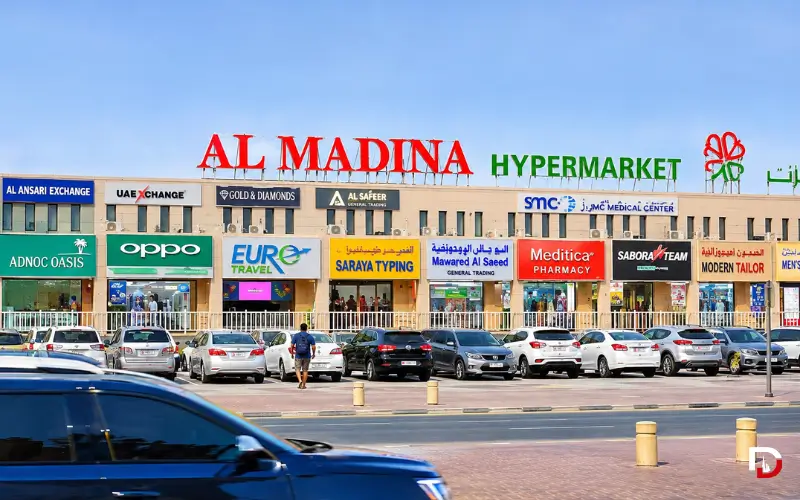
Marhaba Mall. Located on Al Awir Road in Ras Al Khor Industrial Area 3, Marhaba Mall is operated by Al Madina Group. The complex includes an Aster Medical Centre, while Al Madina Hypermarket is listed as a nearby retail landmark. It serves people working and living in the surrounding industrial district.
Dubai Central Fruit and Vegetable Market (Al Aweer Market). Dubai Municipality owns this major produce market, which began operations on 3 July 2004. It handles wholesale and retail trade, including the import and export of fresh produce from local and international suppliers. Thousands of tonnes of fruits and vegetables pass through the market, which stands inside Ras Al Khor Industrial Area 3 near the Al Aweer boundary.
Bloom Market. Dubai Municipality opened Bloom Market on 17 July 2023 as an air-conditioned indoor produce market. It covers approximately 66,000 square metres across two floors and stands on 18th Street in Industrial Area 3. The published operating hours are 6:00 AM to 11:00 PM daily. Gulf News reports that the market sits around one kilometre from the Central Fruit and Vegetable Market.
Smaller grocery stores and supermarkets also operate around these major shopping destinations. They mainly serve industrial workers, staff accommodation buildings, and nearby residents who need everyday household supplies.
Restaurants in Ras Al Khor
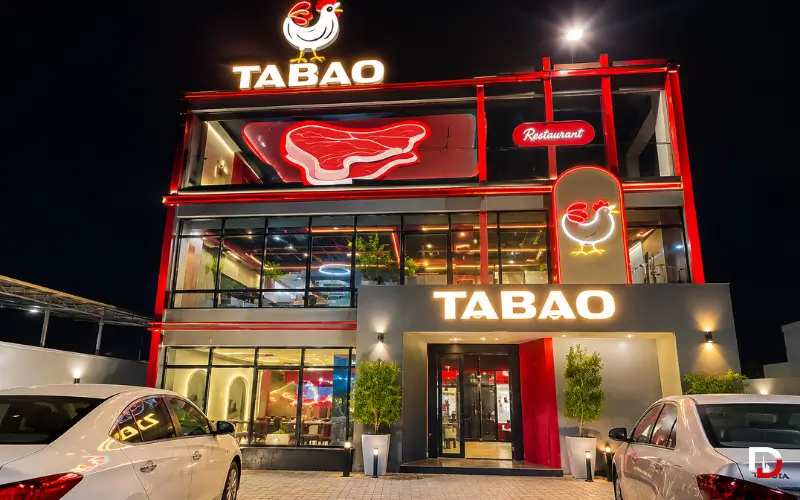
Restaurants in Ras Al Khor Industrial Area mainly serve the people working in its warehouses, workshops, markets, and commercial buildings. Pakistani restaurants and local cafeterias are common, with affordable meals and convenient dining options available around the industrial streets. Business listings provide the following examples, although visitors should confirm their current addresses and opening hours before travelling.
- Islamabad Restaurant: Serves Pakistani food, including daal, karahi and biryani. Its listed address is on 15B Street in Industrial Area 2.
- Al Tabaq Al Shahi Restaurant: Offers Pakistani cuisine along Ras Al Khor Road in Industrial Area 2.
- Al Razooqi Restaurant: Operates as a restaurant and cafeteria on 15A Street in Industrial Area 3.
- Patan Restaurant: Located opposite the vegetable market, near the ENOC petrol station.
Visitors who prefer a sit-down meal after exploring the sanctuary can also consider restaurants at Dubai Creek Harbour. Duo Gastrobar and Argentina Grill Creek are among the dining venues listed on OpenTable. The wildlife sanctuary itself does not currently have a café, so visitors should arrange refreshments before or after their visit.
Nearby Residential Areas
The wildlife sanctuary does not contain residential buildings, and the industrial district has only a limited number of apartments and staff accommodation facilities. People who want to live near Ras Al Khor generally consider the surrounding residential communities.
- Nad Al Hamar: A residential district close to the industrial area, with access to the surrounding road network.
- Nad Al Sheba: Known for its villa communities and established residential neighbourhoods.
- Al Jaddaf: A creekside district near the sanctuary’s Lagoon Hide, with residential and commercial developments.
- Dubai Creek Harbour: An Emaar waterfront community close to the sanctuary, with residential buildings, dining venues and waterfront spaces.
- Dubai Festival City: A mixed-use waterfront community with Festival City Mall and a planned Blue Line metro connection.
- International City: A residential and commercial development farther east, with a future metro connection to the Ras Al Khor Industrial and Auto Market stations.
Actual travel distances and journey times depend on the starting point, selected road,d and traffic conditions. Residents and visitors should check a live navigation app before planning regular journeys.
Nearby Attractions
Ras Al Khor’s surroundings offer several places worth visiting after spending time at the wildlife sanctuary. Some are close to Dubai Creek, while others require a short drive through the city’s main roads.
Dubai Creek Harbour. Emaar’s waterfront development is one of the closest leisure destinations to the sanctuary. Visitors can spend time along the waterfront, enjoy views of Dubai Creek and choose from several hospitality venues. Emaar also recommends combining a visit to the flamingo sanctuary with time at Dubai Creek Harbour.
Jameel Arts Centre. Located along Dubai Creek in Al Jaddaf, Jameel Arts Centre is a contemporary art museum that opened in November 2018. Its exhibitions and cultural spaces make it a suitable stop for visitors interested in art and creative activities.
Dubai Festival City Mall. This shopping destination anchors Dubai Festival City and offers retail stores, dining venues, and entertainment facilities. Visitors can combine a morning at the sanctuary with shopping or a meal at the mall.
Downtown Dubai and Burj Khalifa. Downtown Dubai lies west of Ras Al Khor, and its high-rise buildings form part of the skyline visible from the wetland. Burj Khalifa is another major landmark in the same direction, although visitors need to drive from the sanctuary to reach it.
Facilities and Services in Ras Al Khor
Ras Al Khor Industrial Area provides a range of everyday services for workers, traders, businesses, and nearby residents. Its facilities are spread across the three industrial sections, with many retail and healthcare options concentrated in Area 3.
- Supermarkets and groceries: Al Madina Hypermarket, KMK Supermarket and smaller grocery shops serve people living and working in Industrial Area 3.
- Healthcare: Aster Medical Centre operates inside Marhaba Mall. Bayut also lists Aster Clinic, Right Health Clinic and Pharmacy, and Clinicare Medical Centre Samari. RX Pharmacy operates at Samari Retail Center.
- Petrol stations: An ENOC station is listed near the vegetable market, providing fuel services for drivers visiting the commercial district.
- Parking: Designated parking areas serve the wildlife sanctuary’s viewing hides. Visitors should use approved spaces and avoid parking outside marked areas.
- Vehicle maintenance: Spare-parts retailers, car washes, repair garages and vehicle service centres operate across the industrial streets. Dubai Municipality’s used-car trading complex also serves the local vehicle market.
- Wholesale shopping: Dubai Central Fruit and Vegetable Market and Bloom Market handle produce sales for wholesale buyers and retail customers.
- Commercial services: Laundries, cafeterias, small retail outlets, and other service businesses support the area’s workforce and residents.
Is Ras Al Khor a Good Place to Live or Work?
The answer depends on which part of Ras Al Khor you are considering. The wildlife sanctuary is a protected natural area without residential accommodation. The industrial district, on the other hand, has limited apartments and staff housing, particularly in Area 3. People who prefer quieter surroundings, parks, and established family facilities usually look towards Nad Al Sheba or Dubai Creek Harbour.
For employment, Ras Al Khor offers opportunities in vehicle trading, automobile maintenance, logistics, warehousing and wholesale food distribution. Its road connections make it accessible for workers and businesses transporting goods across Dubai. The planned Blue Line stations should provide another commuting option once the metro service begins in 2029.
Daily facilities are available within the industrial district, including supermarkets, medical centres, markets, restaurants and vehicle services. This makes it convenient for people who work nearby and want essential services within reach.
However, the industrial area’s working environment may not suit everyone looking for a residential neighbourhood. People considering a home there should inspect the building, surrounding streets, traffic conditions, and available facilities before making a decision.
Best Time to Visit Ras Al Khor
November to March is generally the most comfortable period to visit Ras Al Khor Wildlife Sanctuary. Temperatures are lower, making it easier to spend time at the birdwatching hides, while migratory birds increase the variety of species visitors may see. Dubai Municipality reports winter bird numbers of up to 25,000.
Summer visits are also possible because the sanctuary opens early in the morning. However, Dubai’s heat and humidity can make outdoor visits uncomfortable, particularly around midday. An early arrival also provides softer natural light for wildlife photography.
The industrial district follows its own commercial schedule rather than the sanctuary’s seasonal visiting hours. Bloom Market operates from 6:00 AM to 11:00 PM daily, while restaurants and other businesses may have different timings. Visitors planning to see both parts of Ras Al Khor can visit the sanctuary in the morning and head to the markets afterwards.
Important Things to Know Before Visiting
A visit to Ras Al Khor Wildlife Sanctuary requires visitors to follow Dubai Municipality’s rules. These measures protect the birds and their habitats while allowing people to observe wildlife from designated viewing areas.
- Quiet zone in the hides: Visitors must keep noise to a minimum. Phone use, eating, drinking, smoking,g and bringing pets into the hides are prohibited.
- Capacity: Each hide allows a maximum of 15 people at a time. Visitors should give priority to people of determination and avoid sitting on window ledges or pushing past others.
- Stay within the fence: Do not cross restricted areas, enter fenced sections, or ignore No Entry signs.
- Protect the wildlife: Visitors must not approach or harm animals, collect plants or wildlife, damage vegetation, or disturb birds. Such actions can result in heavy fines.
- Parking: Use only designated parking areas around the sanctuary.
- Photography: Individual photographers can visit during public opening hours, subject to registration requirements. Commercial filming requires a No Objection Certificate from Dubai Municipality.
- Seasonal timings and hide status: Check the official visitor page for the latest opening hours and access arrangements before travelling.
- What to bring: Carry drinking water, sun protection, binoculars and a camera. A bird identification guide can also help visitors recognise different species.
Following these rules helps protect the wetland and ensures that other visitors can enjoy the sanctuary without disturbing its wildlife.
Also Explore: King Faisal Street
Frequently Asked Questions
Where is Ras Al Khor located in Dubai?
Ras Al Khor lies at the inland end of Dubai Creek, east of Downtown Dubai. The wildlife sanctuary sits near the junction of Ras Al Khor Road (E44) and Dubai–Al Ain Road (E66), while the industrial district extends southeast along Ras Al Khor Road and Sheikh Mohammed bin Zayed Road.
What is Ras Al Khor famous for?
Ras Al Khor is best known for its wildlife sanctuary, where greater flamingos and migratory birds gather around the wetlands. The wider area is also recognised for its industrial district, wholesale produce markets and automobile businesses.
Is Ras Al Khor a residential area?
Ras Al Khor is mainly known for its protected wetland and industrial district rather than conventional residential communities. The industrial area has limited apartments and staff accommodation, while nearby Nad Al Sheba and Dubai Creek Harbour offer more established residential options.
How do I reach Ras Al Khor by metro?
There is no metro station directly beside the wildlife sanctuary. Visitors can take the Green Line to Al Jadaf or Creek station and continue by taxi. The Dubai Metro Blue Line is scheduled to open on 9 September 2029, with planned stations at Ras Al Khor Industrial and Auto Market.
Is Ras Al Khor Wildlife Sanctuary free?
Yes, visitors can enter the sanctuary and use its birdwatching hides without paying an admission fee. Walk-in registration is required, and visitors should check Dubai Municipality’s website for current access requirements.
What are the sanctuary’s opening hours?
Ras Al Khor Wildlife Sanctuary opens from 7:30 AM to 5:30 PM between October and March. From April to September, the published hours are 6:00 AM to 6:00 PM. Check the official visitor page for seasonal changes and hide availability.
Can visitors see flamingos in Ras Al Khor?
Yes, greater flamingos live in and visit Ras Al Khor Wildlife Sanctuary throughout the year. The Flamingo Hide provides the best viewing opportunity, while winter generally brings larger numbers of birds to the wetland.
What areas are near Ras Al Khor?
Nearby areas include Nad Al Hamar, Nad Al Sheba, Al Jaddaf, Dubai Creek Harbour, Dubai Festival City, International City, and Al Aweer. Their distance from the sanctuary and industrial district varies depending on the route.

1 Comment
Sandstorm Cleanup in Dubai: DIY or Professional Help
November 18, 2026[…] That is the point where I would rather pay for a crew than lose a weekend. After a heavy sstormm it makes sense to hand the deep clean to professionals, and I would look at a local service such as Eco Clean Dubai alongside a couple of others. Ask how they treat stone floors and whether window tracks are included. Must Explore: Ras Al khor Dubai […]