






If the car suddenly accelerates but doesn’t accelerate, the first thing that comes to mind is worry. Automatic transmission slipping. This is not a “random” occurrence and shouldn’t be overlooked. The harsh conditions of driving in the UAE can cause even the smallest transmission problems to cause severe internal damage if they’re not addressed. This blog explains the true reasons, some of the insidious issues, and the best solutions to keep costs under control, identify problems identified early, and the transmission from turning into a financial headache.
Why Is Automatic Transmission Slipping More Than a Minor Issue?
What starts as an occasional delay can quickly turn into a serious mechanical problem. Automatic transmission slipping. That’s often the first warning that internal components are no longer working in sync. When slipping is ignored, friction increases, heat builds up, and wear accelerates across critical transmission systems. This is how a manageable car repair in Dubai quietly turns into a major failure.
Precision pressure, timing, and fluid condition are key factors in automatic transmissions, so early diagnosis is important. When this equilibrium is disrupted, any damage is unlikely to be contained. Clutch surface deterioration, loss of hydraulic pressure, and electronic compensation for the loss of clutch pressure cause more stress. Throw in long periods of idling, lots of stop-and-go traffic, and hot weather, and the dangers compound.
When it comes to automatic transmission slipping, you might try to shrug it off as a minor problem and incur a lot more cost, wait time, and unwanted part replacement in the process. Early detection provides a wider choice of repair options—and much more cost-effective.
Transmission Fluid Hygiene – The First Thing Professionals Check
The beginning of all serious transmission inspections. Electronic parts and internal parts have nothing to do with fluid condition. Here, when there is a small warning sign, it’s easy to fall into simple service and major repair.
Why Fluid Condition Is Never Ignored
When diagnosing a transmission, the first place to start is the ATF (Automatic Transmission Fluid) for three reasons: The ATF lubricates, cools, and regulates pressure. As heat exposure causes the fluids in the body to oxidize, their viscosity decreases, and the protective coating on the internal parts of the body disappears. Slipping then becomes a fault that becomes a chain reaction.
What Technicians Look For First
Early inspection is based on visible and/or sensory signs that indicate early damage. Any burnt odor is a strong sign of overheating and too much friction within the system. A fluid level check on the fluid level dipstick will make sure that the slip is due to either a shortage of fluid or the fluid is leaking internally, which are two completely different repair approaches.
The Maintenance Choice That Impacts Repair Cost
Many drivers don’t realize that decisions to provide service are as important as the driving itself. Transmission flush vs. drain and fill should be determined by the condition of the fluid and the amount of wear in the system, and not for convenience. An appropriate service will keep performance levels, and ignoring ATF maintenance can make an inexpensive preventative maintenance item into an expensive internal repair. These are prevented by good fluid hygiene:
- Accelerated clutch wear
- Hydraulic pressure instability
- Unnecessary rebuild-level repairs
Catching fluid-related issues early keeps repair options flexible and costs under control.
Transmission issues rarely resolve on their own, and waiting often increases repair costs. A professional inspection can identify the real cause before damage spreads across critical components. Book a Car Transmission Diagnostic Dubai today to get clear answers, accurate recommendations, and a repair plan based on evidence, not guesswork. Early action protects performance, reliability, and long-term value.
When Electronics Cause Automatic Transmission Slipping
Modern vehicles use a lot of electronics for controlling shifting accuracy and controlling pressure. In the event of software or sensor errors, the transmission can still respond incorrectly, even if mechanical parts are working properly. That’s why it is best to consider electronic diagnostics before making any big decisions regarding repairs.
How Control Systems Influence Gear Engagement
The Transmission Control Module (TCM) is at the heart of electronic shifting logic and continually adjusts shift timing and pressure. In some cases, mechanical warning is not given, and automatic transmission slipping can suddenly manifest if it receives incorrect data input to the module. If gears become disengaged under heavy loads due to faulty commands, this will result in an inconsistent power delivery and undue strain on internal components.
Sensors and Actuators That Commonly Trigger Slipping
Electronic faults are numerous and can be magnified and disruptive. When shift solenoids malfunction, they can disrupt hydraulic flow, and when a Throttle Position Sensor reading failure occurs, it can send incorrect load data to the computer. In such a case, automatic transmission slipping is a control problem and not a wear problem, and correct diagnosis must be used.
Why Scan Data Matters Before Any Repair
Modern diagnostics are based on fault memory, NOT assumptions. OBD-II diagnostic codes (P0700 series) offer guidance by alerting to any electronic issues in the transmission, which are recorded in the system. These signals will send the driver into protective strategies, often referred to as “slipping,” in the Transmission Control Module (TCM). The live data reading is used to diagnose automatic transmission slipping; otherwise, the parts are likely to be replaced without correction. Using e-diagnostics reduces the risk of:
- Random component replacement
- Misdiagnosed mechanical failures
- Escalating repair costs caused by guesswork
Correct electronic analysis means repairs are evidence-based, efficient, and targeted.
Torque Converter Performance Problems That Mimic Gear Failure
The problems with the torque converter can be confused with internal transmission issues. The failure pattern of the converter is similar to gears, as it is located between the gearbox and the engine. It’s essential to grasp this distinction before making any substantial repairs.
Where Torque Transfer Starts To Break Down
The Torque converter clutch (TCC) automatically and smoothly engages and disengages as driving conditions shift. As it starts to fail, the power transfer will be unstable and slip, and symptoms will occur. With the wear in the needle bearings, engagement can become inconsistent and cause vibration, which is similar to internal gear engagement problems.
Converter Faults That Feel Worse Than They Are
Many times the problem isn’t caused by permanent damage, but by failure to control. With intact gears, the car will still feel weak when put under load due to stator issues. That’s why it’s important to distinguish between shudder and slip: one of them indicates friction instability, and the other pressure loss.
Why Correct Identification Saves Money
It’s a costly error to replace a transmission if it’s just the converter that’s gone bad. If the Torque converter clutch (TCC) is the problem, it can be fixed or replaced without an expensive gearbox replacement. By making an accurate diagnosis of the converter, the following can be avoided:
- Unnecessary transmission rebuilds
- Incorrect internal part replacement
- Inflated repair costs caused by misdiagnosis
Early recognition of the characteristics of torque converter operation helps to keep repair choices on track and costs under control.
Internal Wear Components That Signal Advanced Damage
Not all problems with the transmission are small. If the slipping is becoming chronic, there may already be some internal wear, and at this point, changes are not enough to solve the problem. It’s time to go from prevention to damage control.
What Actually Wears Inside the Transmission
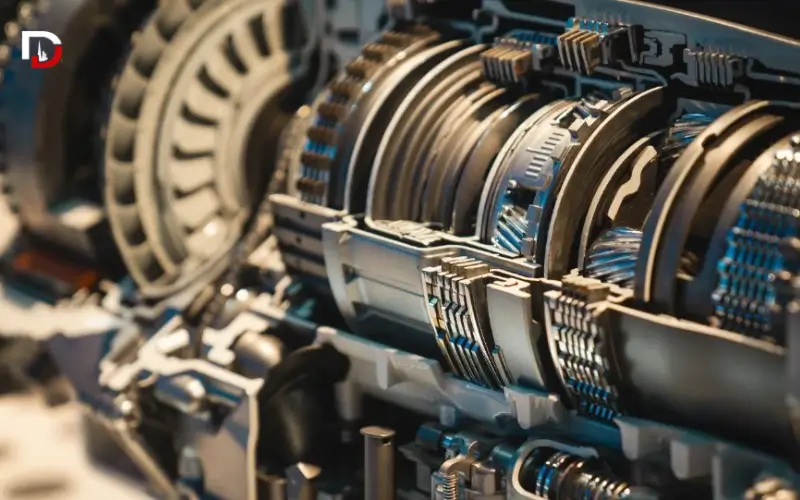
The gears in automatic transmissions are held and released by layers of friction surfaces. Clutch packs have less ability to grip over time, particularly with repeated heat cycles. If the friction material goes, so do the friction plates, and even if the fluid and electronics are operating properly, the plates will exhibit slip.
Components That Indicate Deeper Failure
Certain areas indicate more than normal usage. Damaged planetary gear sets indicate higher levels of mechanical wear and tear, whereas stretched or weakened transmission bands have a difficult time maintaining gear ranges while under load. At this stage, the symptoms of clutch packs do not necessarily get worse.
Why This Stage Changes the Repair Conversation
A turning point is reached when internal wear is present. More driving will cause more damage, create more debris, and make more work for the rebuild. If you have advanced internal wear, you’ll experience:
- Loss of multiple gear ranges
- Escalating repair scope
- Reduced chances of partial repair solutions
Early discovery of internal wear does not mean that it cannot be repaired, but rather that decisions can be made that the damage may be irreversible.
Hydraulic Pressure Dynamics behind Gear Slippage
Gears are held in place by hydraulic pressure! When this pressure decreases, parts and electronics will slip, even if they look OK. That’s why pressure faults are frequently confused.
The source is the transmission oil pump, which supplies the pressurized oil to the system. Gear engagement is not stable when there is any reduction in flow or instability. Then, the pressure travels through the valve body,y in which individual channels open and close to regulate gear shifting.
Constantly, as the valve is worn in the valve body, fluid paths can be clogged and not prompt any clear fault codes. Meanwhile, pressure can leak in from within as a result of aging hydraulic seals. Lack of balance in the pressure regulator valves causes unpredictable engagement in the transmission.
Why Pressure Problems Are Hard To Spot
| What Looks Fine | What’s Actually Happening |
| Gears not visibly damaged | Pressure is leaking internally |
| Electronics reporting normal | Hydraulic flow is unstable |
| No fault codes present | Pressure regulation is failing |
That’s why system-level diagnostics are important. Repairs are often made without examining the cause of the problem by analyzing the pressure behavior.
What Drivers Notice When Transmission Slipping Starts?
Transmission problems don’t manifest themselves suddenly. They manifest long before any warning light is lit on the dashboard: They’re in their car before they’re in the car. Signs of automatic transmission slipping are always clear and consistent and should not be ignored. The driver’s focus and its typical meaning:
- High RPM without acceleration → Loss of hydraulic holding pressure or worn friction surfaces
- High RPM without acceleration → Torque transfer breakdown under load
- Delayed engagement → Low fluid pressure, electronic delay, or internal leakage
- Limp mode → System protection triggered by detected transmission fault
- Harsh shifting → Pressure imbalance or control irregularities
- Erratic gear changes → Escalating internal stress or inconsistent pressure regulation
If Automatic Transmission slip occurs during one of these conditions, it means it’s not just an intermittent issue. If these patterns are identified early, there is less uncertainty, no need to drive unnecessarily at risk, and a diagnosis path can be narrowed before damage takes place.
Repair Decisions – Fix, Rebuild, or Replace?
This is when doubt generally transforms into stress. Once automatic transmission slipping is so bad that repairs are necessary, the question is what is the right course of action, both mechanically and financially. There is no correct choice just because of the damage; it’s based on facts and not assumptions.
Understanding the Real Cost Logic
However, not all the slipping problems will be solved in the same way. The term transmission rebuild versus replacement has nothing to do with mileage; it’s all about internal wear, loss of pressure, and integrity of the components. Rebuild means to replace and repair parts that are damaged, while replacement is usually for large or serious failures. Early comparison of Transmission rebuild vs. replacement avoids overspending.
When Replacement Makes More Sense
For more serious issues, or multiple failures, remanufactured transmissions can provide an alternative to new transmissions. These units are reconditioned to meet standards and pretested prior to installation, when original parts are no longer available. This is a choice that can be made to provide a balance between reliability and controlled downtime.
Why Timing Changes Everything
Wait till later to make options. Following a preventative maintenance schedule allows issues to be identified early and paths for repair to be flexible. Early attention to transmission slipping will typically result in smaller, quicker, and less costly repairs. Smart repair decisions ensure:
- Predictable costs instead of escalating bills
- Repairs matched to actual damage
- Confidence that money is spent where it truly matters
Clear diagnostics transform the complex decisions on transmissions into informed, controlled decisions, not costly guesses.
Must Explore: Mazyad Mall Abu Dubai
Why Professional Diagnosis Matters Before Damage Multiplies
Rarely will transmission issues remain a local problem. Any extra gear added to a transmission will create more heat, friction, and internal stress each time it slips. If it is not diagnosed correctly, it is easy for the initial defect to become a major problem and restrict the repairs.
Professional examination is based on cause, not symptoms. Advanced testing determines if the automatic transmission is slipping due to fluid failure, electronic control failure, hydraulic failure, or internal component wear. This will prevent unnecessary part replacement and help focus repairs from the outset.
An early assessment is a beneficial solution for the car and the wallet. Frequently, the most economical and effective first step is to have a professional look at this automatic transmission problem and repair it at the diagnostics stage before it cascades into other systems and components.