






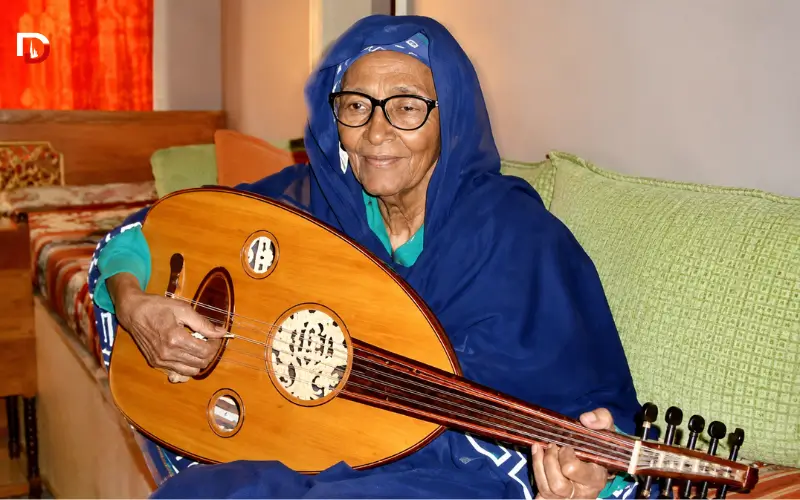
Asma Hamza was a Sudanese composer and oud player who became one of the early female composers in Sudan. She first dreamed of becoming a singer, but problems with her vocal cords led her to the oud instead. She went on to build a decades-long career composing melodies for Sudanese and Arab artists. Google honoured her with a Doodle on July 17, 2023, highlighting her recognition in Sudan’s Laylat AlQadr AlKubra music competition in 1997.
Asma Hamza Quick Facts
| Detail | Information |
|---|---|
| Name | Asma Hamza |
| Full name | Asma Hamza Bashir |
| Nationality | Sudanese |
| Profession | Composer and oud player |
| Main instrument | Oud |
| Birth year | 1932, according to Google |
| Birthplace | Halfaia Al-Malaki, Sudan |
| Early musical path | Singing, whistling, and self-taught oud playing |
| First composition | Ya Ouyouni |
| Year associated with Ya Ouyouni | 1956 |
| Major composition | Al Zaman Al Tayb |
| Al Zaman Al Tayb | 1983 |
| Reported compositions | More than 90 |
| Major recognition | Laylat AlQadr AlKubra competition |
| Recognition year | 1997 |
| Date of death | May 21, 2018 |
| Google Doodle | July 17, 2023 |
Google’s official Doodle gives 1932 as Asma Hamza’s birth year. Some secondary reports give different biographical details, so 1932 should be treated as the date provided by Google’s official biography rather than as a detail with no historical disagreement.
Who Was Asma Hamza?
Asma Hamza was a Sudanese musician whose career combined oud performance and musical composition. She became particularly important because she built her career at a time when women faced social restrictions in Sudan’s music scene. Google describes her as one of the first female composers in Sudan and notes that women creating music was not socially accepted when she was young.
Her path into music did not begin with formal training. She first wanted to sing, but her vocal cords were not suited to singing safely. She then began whistling melodies and eventually turned that musical ability towards the oud.
Her father encouraged her interest in music and borrowed an oud so she could practise. Hamza learned many songs by listening to them and reproducing them from memory and by ear. That early experience became the foundation for her later work as a composer.
Where Was Asma Hamza Born?
Google’s official Doodle states that Asma Hamza was born in 1932 in Sudan and identifies her as a Sudanese composer and oud player.
Some published sources give different birth information. Because the available records do not completely agree, it is safer to use Google’s 1932 figure with attribution instead of presenting another date as certain.
Her early life was surrounded by music. Ahram Online reports that musicians visited her family home, giving her exposure to performers and musical traditions from a young age. This environment helped develop her interest before she began building her own career.
How Did Asma Hamza Start Her Music Career?
Hamza originally wanted to become a singer. Her vocal cords, however, prevented her from safely pursuing singing. She found another way to express melodies by whistling them. Her father noticed her ability and supported her by getting her an oud.
She then began teaching herself. Rather than learning songs from written scores, she listened to other performers and copied what she heard. Ahram Online also reports that she developed her oud playing by listening to musicians and reproducing their playing by ear.
This was the beginning of a musical career that eventually moved from private practice to public performance and composition.
Why Did Asma Hamza Compose Music in Secret?
The social environment in Sudan made her early musical ambitions difficult. Google states that it was not socially acceptable for women to create music in Sudan at the time. Hamza recalled that she composed her first piece secretly.
Her father’s encouragement gave her a degree of support that many women interested in music did not have.
She continued composing despite those restrictions. Over time, she became recognised as a composer and worked with several artists in Sudan and the wider Arab music scene.
This part of her story helps explain why her later recognition carried particular significance.
When Did Asma Hamza Learn to Play the Oud?
Hamza began learning the oud through listening and practice rather than starting with conventional music education. Google says she later became among the first formally trained women oud players in 1946.
Ahram Online describes her as becoming the first Sudanese woman to receive formal oud training, while Google’s wording is more cautious.
For a factual biography, Google’s formulation is preferable: she was among the first formally trained women oud players in Sudan. Her progression from self-taught musician to formally trained oud player is one of the defining parts of her career.
What Was Asma Hamza’s First Composition?
“Ya Ouyouni” is widely identified in published accounts as one of Hamza’s earliest and first known compositions. The piece dates to 1956 and was based on poetry by Egyptian poet Ali Mahmoud Taha.
The work is important because it marks Hamza’s development from an oud player into a composer. Her later career would involve many similar relationships between poetry, melody, and vocal performance.
What Is Ya Ouyouni?
Ya Ouyouni is a composition associated with Asma Hamza and the poetry of Ali Mahmoud Taha.
The work is generally dated to 1956 in published accounts. It represents an early stage in Hamza’s composition career and shows her connection with the wider Arabic literary and musical tradition.
Rather than simply performing music written by others, Hamza was creating melodies herself. That distinction became increasingly important as her career developed.
Asma Hamza’s Professional Music Career
Hamza’s career developed over several decades. She performed in smaller gatherings before reaching wider audiences. Ahram Online reports that she used poems by recognised poets and created compositions that were later performed by established singers.
This gave her a role that extended beyond performing the oud. She was creating the musical structure behind songs that other artists brought to audiences.
Published accounts also place her work with the Sudanese Music Corps in 1982. That period came after decades of musical development and helped mark another stage in her professional career.
Asma Hamza and Al Zaman Al Tayb
Al Zaman Al Tayb is one of the works most closely associated with Asma Hamza. Published accounts identify the lyrics with Sudanese poet Saifeddine Al-Desouki and the performance with Sudanese singer Sumaya Hassan. The song is generally dated to 1983.
The work is important because it brought together three parts of Sudanese artistic culture: poetry, composition, and singing. Hamza’s role was the composition of the melody, while the singer gave the work its public vocal performance.
Who Sang Al Zaman Al Tayb?
Sumaya Hassan performed Al Zaman Al Tayb. Saifeddine Al-Desouki wrote the lyrics, while Asma Hamza composed the music.
The song remains one of the works most often mentioned when Hamza’s musical career is discussed. It also demonstrates how her compositions reached audiences through collaborations with singers.
How Many Songs Did Asma Hamza Compose?
Published accounts credit Asma Hamza with more than 90 compositions.
The figure should be presented as a reported total rather than as a number from a complete, publicly searchable catalogue. Her output nevertheless shows the scale of her career. Hamza was not known for one isolated composition; she worked as a composer over a long period and created music for different performers.
Which Musicians Worked With Asma Hamza?
Asma Hamza compositions were performed by several Sudanese artists.
Published accounts associate her work with names including Abdel Karim Al-Kabli, Mohamed Mirghani, Hisham Damas, Sumaya Hassan and Abida Sheikh.
Her network of collaborators is important because much of a composer’s work reaches the public through performers rather than through the composer appearing as the lead artist. Asma Hamza contribution therefore sits behind many of the performances connected with her career.
What Was Asma Hamza Biggest Composition?
Asma Hamza is also associated with Azza and Izza, a larger-scale work in her repertoire. Published accounts report that Hamza described it as the biggest composition she had created. That does not necessarily make it her most famous work.
Al Zaman Al Tayb is more frequently highlighted when her popular musical recognition is discussed, while Azza and Izza is notable for its scale.
Keeping those two ideas separate gives a more accurate description of her repertoire.
Who Influenced Asma Hamza?
Hamza’s musical interests extended beyond Sudan.
Published accounts associate her with major Egyptian artists including Umm Kulthum, Mohamed Abdel Wahab, Abdel Halim Hafez and Shadia.
Umm Kulthum appears particularly important in accounts of Hamza’s musical interests. Her exposure to major Egyptian singers placed her work within the wider Arab musical culture of the twentieth century. At the same time, Hamza retained her connection with Sudanese music and poetry.
Asma Hamza as a Mentor
Hamza’s influence also extended to younger musicians. Published accounts identify Sudanese musician Bashir Abbas among those who studied under her.
That adds another dimension to her career. She was not only composing and performing. She was also passing musical knowledge to another generation.
Asma Hamza and Women in Sudanese Music
Gender is central to understanding Hamza’s career. Google states that women creating music was not socially acceptable in Sudan during her early years. Her first composition was therefore created in secret.
She continued working despite those restrictions and eventually became recognised as one of the early female composers in Sudan.
That achievement matters because she established a sustained musical career rather than making a single appearance in a field dominated by men.
Her career also created an example for women who wanted to participate in Sudanese music as composers and instrumentalists.
Read More: Dr. Saniya Habboub biography
Asma Hamza and Arab Women’s Cultural History
Hamza’s story also fits into the wider history of Arab women who contributed to culture, literature, music, and public life. We should not suggest that Hamza and Ousha had the same profession or career. Their relevance comes from their contributions to Arab cultural history.
What Happened to Asma Hamza in 1997?
The year 1997 became an important point in Hamza’s public career.
Google says she was among the winners of Sudan’s Laylat AlQadr AlKubra music competition and describes the achievement as a turning point that helped her gain recognition in a male-dominated field.
Ahram Online gives July 17, 1,997 as the date when she was announced among the winners. This recognition came after decades of musical work. It was not the beginning of her career. It was a major public recognition of work she had already been doing for many years.
Why Did Google Make an Asma Hamza Doodle?
Google dedicated a Doodle to Asma Hamza on July 17, 2023. The Doodle marked the 1997 competition recognition and highlighted her journey as a Sudanese composer and oud player.
Google’s own biography focuses on several parts of her story:
- her childhood love of music
- her dream of becoming a singer
- her vocal-cord problems
- her move to whistling
- her father’s encouragement
- her self-taught oud playing
- the social restrictions facing women musicians
- her secret early composition
- her later work as a composer
- her formal oud training.
The Doodle brought her story to a much wider audience.
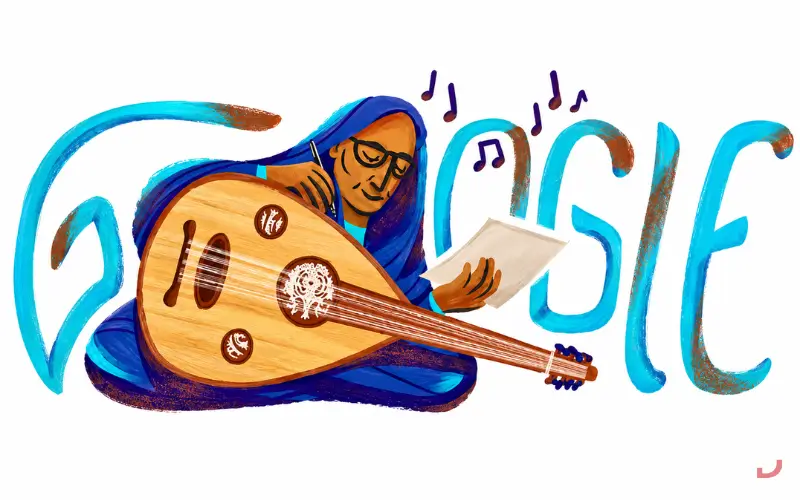
Where Was the Asma Hamza Google Doodle Shown?
The Doodle appeared across the Middle East and North Africa, including the United Arab Emirates.
However, the UAE connection should be described accurately. There is no need to claim that Hamza had a major UAE-based career unless a reliable source establishes it. The relevant UAE connection is the regional appearance of Google’s Doodle, not a documented professional career in the Emirates.
When Did Asma Hamza Die?
Asma Hamza died on May 21, 2018. Ahram Online also reports the same date.
Her death came after a career that had lasted for decades.
Interest in her work returned strongly in 2023 when Google dedicated its Doodle to her.
How Old Was Asma Hamza When She Died?
The safest answer is to avoid giving a disputed age.
Google gives 1932 as her birth year, while some secondary sources have published different figures.
Her death date, May 21, 2018, is much clearer in the available reporting.
For that reason, this biography uses Google’s 1932 birth-year information without attaching a potentially incorrect age at death.
Asma Hamza Career Timeline
| Year | Career milestone |
|---|---|
| 1932 | Google gives this as her birth year |
| Childhood | Developed a strong interest in music |
| Early years | Wanted to sing but turned to whistling |
| Early musical development | Began learning the oud with her father’s encouragement |
| 1946 | Google says she became among the first formally trained women oud players |
| 1956 | Ya Ouyouni associated with Ali Mahmoud Taha’s poetry |
| 1982 | Published accounts place her with the Sudanese Music Corps |
| 1983 | Al Zaman Al Tayb associated with Sumaya Hassan and Saifeddine Al-Desouki |
| 1997 | Recognised among the winners of the Laylat AlQadr AlKubra competition |
| May 21, 2018 | Died |
| July 17, 2023 | Google honoured her with a Doodle |
The timeline separates Google’s directly stated information from dates reported by other published sources.
Asma Hamza Musical Legacy
Asma Hamza legacy is larger than the Google Doodle that introduced her to a new generation.
She built a career around the oud and composition. She worked with singers and poets, created a reported body of more than 90 compositions, and became one of the early recognised female composers in Sudan.
Her career also shows how musical traditions can cross borders. She was rooted in Sudanese music but influenced by major Arab musicians and worked with Arabic poetry. Her music therefore belongs to both Sudanese cultural history and the wider Arab musical tradition.
Why Is Asma Hamza Important?
There are several reasons her name remains significant.
She was a composer who worked for decades. She was an oud player who developed her skills first through listening and practice and later received formal training. She was also a woman who entered professional musical composition despite social restrictions that made such a career difficult.
Her 1997 competition recognition gave her career an important public milestone. Google’s 2023 Doodle then brought that story to audiences across the MENA region. Her importance comes from the combination of music, composition, cultural identity,ntity and women’s participation in Sudanese artistic life.
Final Thoughts
Asma Hamza’s career began with a change of direction. She wanted to sing but turned to the oud after problems with her vocal cords. From there, she developed her musical ear, composed songs, worked with performers, and became one of the early female composers recognised in Sudan.
Her 1997 competition recognition marked an important stage in that career. Google’s 2023 Doodle later introduced her story to a much wider MENA audience.
Her name now stands for more than one song or one award. Asma Hamza represents an important part of Sudanese musical history, particularly the role of women in composition and oud performance.
Read More: Ousha Al Suwaidi’s biography
Frequently Asked Questions
Who was Asma Hamza?
Asma Hamza was a Sudanese composer and oud player who became one of the early female composers in Sudan. Google honoured her with a Doodle in 2023.
When was Asma Hamza born?
Google’s official Doodle gives 1932 as her birth year. Other published records differ, so the 1932 date should be attributed to Google.
Where was Asma Hamza born?
She was born in Sudan and is identified by Google as a Sudanese composer and oud player.
What instrument did Asma Hamza play?
She played the oud. She initially learned by listening to music and reproducing what she heard.
Why did Asma Hamza not become a singer?
She wanted to become a singer but had vocal-cord problems that prevented her from safely pursuing singing. She then turned towards whistling and the oud.
What was Asma Hamza’s first composition?
Ya Ouyouni is identified in published accounts as an early composition from 1956, based on poetry by Ali Mahmoud Taha.
What is Asma Hamza’s most famous composition?
Al Zaman Al Tayb is one of the works most closely associated with her career. Sumaya Hassan performed the song.
How many compositions did Asma Hamza create?
Published accounts credit her with more than 90 compositions.
When did Asma Hamza gain major recognition?
Google identifies her 1997 Laylat AlQadr AlKubra competition recognition as an important turning point in her career.
Why did Google honour Asma Hamza?
Google honoured her on July 17, 2023, highlighting her career as a Sudanese composer and oud player and her recognition in the 1997 music competition.
When did Asma Hamza die?
She died on May 21, 2018.
Was Asma Hamza the first female composer in Sudan?
Google describes her as one of the first female composers in Sudan. That wording is more accurate than making an unsupported absolute claim that she was the first.
Who influenced Asma Hamza?
Published accounts associate her musical interests with major Egyptian artists including Umm Kulthum, Mohamed Abdel Wahab, Abdel Halim Hafez, and Shadia.
Who was one of Asma Hamza’s students?
Published accounts identify Sudanese musician Bashir Abbas among those who studied under her.