




The Range Rover is designed to deliver a smooth, comfortable, and stable driving experience across all road conditions. Its advanced air suspension system plays a key role in this comfort; however, like any mechanical system, it can develop issues as the vehicle ages. Familiarity with common warning signs and repair options allows you to address minor problems before they escalate into costly repairs. The most frequent air suspension issues include leaking air springs, compressor failure, faulty height sensors, damaged valve blocks, air line leaks, and electrical faults.
You may also notice suspension warning lights, uneven ride height, or an inconsistent driving experience. Regular inspections, timely repairs, and professional assessments help ensure the suspension functions correctly and maintains the comfort and performance your Range Rover was designed to deliver.
Common Range Rover Air Suspension Problems
The air suspension system uses several parts that work together to keep the vehicle level and comfortable. If one part fails, it can affect the whole system. Below are the most common problems owners experience.
| Problem | Common Cause | Recommended Solution |
| Air spring leak | Cracked rubber bags | Replace air springs in pairs |
| Compressor failure | Constant overworking | Replace compressor and inspect for leaks |
| Faulty height sensors | Wear, dirt, or corrosion | Replace sensor and recalibrate |
| Valve block failure | Worn seals or stuck valves | Rebuild or replace valve block |
| Air line leaks | Damaged plastic lines | Repair or replace air lines |
| Suspension warning light | Sensor or system fault | Perform computer diagnostics |
| Uneven ride height | Air leak or bad sensor | Inspect entire suspension system |
| Electrical issues | Wiring or module faults | Repair wiring and test control module |
| Calibration problems | Incorrect suspension settings | Electronic recalibration |
Most Common Range Rover Air Suspension Problems and Solutions
1. Leaking Air Springs
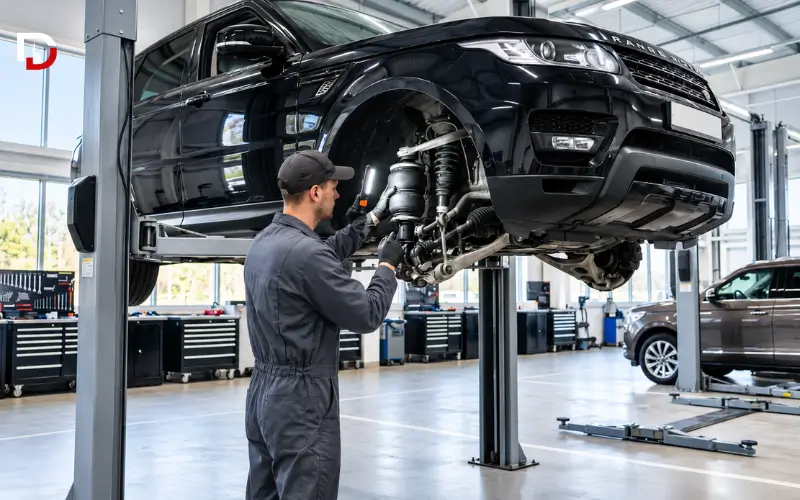
Air springs support the vehicle instead of traditional steel springs. They are made from strong rubber, but heat, age, and rough road conditions can cause the rubber to crack.
Small leaks slowly release air, making the vehicle lower overnight or lean to one side. If ignored, the compressor works harder to maintain pressure, which can lead to expensive repairs.
Solution
Replace leaking air springs as soon as they show signs of wear or damage. It is recommended to replace both air springs on the same axle to maintain balanced suspension performance.
After replacement, inspect the rest of the air suspension system to ensure there are no additional leaks.
2. Air Compressor Failure
The compressor supplies compressed air to the suspension system. When air springs or air lines develop leaks, the compressor runs longer than normal to maintain air pressure.
This extra workload causes overheating and eventually leads to compressor failure. You may notice slow suspension movement, unusual noises, or the vehicle failing to reach the correct ride height.
Solution
Replace the damaged compressor only after identifying and repairing the cause of the excessive workload, such as leaking air springs or air lines.
Because compressor failure is often caused by another hidden suspension problem, professional testing is important before replacing expensive parts.
If you need trusted Range Rover service in Abu Dhabi, Exotic Auto Services offers complete suspension diagnostics to locate the actual fault and recommend the right repair.
3. Faulty Height Sensors
Height sensors measure the vehicle’s ride height and send information to the suspension control module. Dirt, corrosion, damaged wiring, or bent sensor arms can cause incorrect readings.
As a result, the vehicle may sit unevenly or display suspension warning messages on the dashboard.
Solution
Replace any faulty height sensor with a quality replacement part. Once installed, perform an electronic suspension calibration to ensure the vehicle returns to its correct ride height. Proper calibration also improves handling and suspension performance.
4. Valve Block Problems
The valve block controls how compressed air is distributed to each air spring. Over time, internal seals wear out, and the solenoid valves may stick or fail. This can cause uneven ride height, slow suspension response, or air pressure loss.
Solution
Minor valve block problems can often be repaired by replacing the internal seals. If the valve block is heavily worn or damaged, replacing the complete unit provides a more reliable long-term solution. Always test the system after installation to confirm proper operation.
5. Air Line Leaks
Plastic air lines connect the compressor, valve block, and air springs. These lines can become damaged due to road debris, heat, or normal wear. Even a small leak reduces air pressure and forces the compressor to work harder than normal.
Solution
Inspect all air lines carefully and repair or replace any damaged sections. A simple soap and water test can help locate small leaks by showing air bubbles. Fixing air line leaks early protects the compressor and restores proper suspension performance.
6. Suspension Warning Messages
Dashboard messages such as “Suspension Fault” or “EAS Inactive” indicate that the air suspension system has detected a problem.
The vehicle may automatically lower its ride height or limit driving speed to protect the suspension from further damage.
Solution
Do not ignore suspension warning messages. Perform a full computer diagnostic to identify the exact fault and repair the affected component. Clearing the warning without fixing the problem will usually cause it to return.
7. Uneven Ride Height
If your Range Rover leans to one side or sits lower at one corner, the suspension system is not working correctly. This problem is commonly caused by leaking air springs, faulty height sensors, valve block faults, or air leaks. Driving with uneven suspension can increase tire wear and reduce handling stability.
Solution
Inspect the complete air suspension system to identify the root cause of the uneven ride height. Replace any damaged components and recalibrate the suspension after repairs. Correcting the issue early helps prevent additional wear on suspension and steering parts.
8. Electrical and Control Module Problems
The Electronic Air Suspension system relies on sensors, wiring, relays, and the suspension control module. Damaged wiring, blown fuses, loose electrical connections, or software faults can prevent the system from operating correctly.
These problems often trigger warning lights even when the mechanical components are still in good condition.
Solution
Carry out a complete electrical inspection using professional diagnostic equipment. Repair damaged wiring, replace faulty electrical parts, and update or reprogram the control module if required. This ensures proper communication between all suspension components.
9. Suspension Calibration Errors
After replacing suspension parts such as air springs, compressors, or height sensors, the system must be recalibrated. Without proper calibration, the vehicle may sit too high, too low, or unevenly, affecting comfort and handling.
Solution
Use professional diagnostic equipment to recalibrate the suspension according to the manufacturer’s specifications.
Proper calibration restores the correct ride height, improves vehicle stability, and ensures all suspension components work together correctly.
Simple Air Suspension Checks You Can Perform on a Range Rover
Some basic checks can help identify suspension problems before visiting a workshop. These inspections do not replace professional diagnostics but may reveal obvious issues.
- Look for a vehicle leaning after being parked overnight.
- Listen for the compressor running longer than normal.
- Spray soapy water on air springs and air lines to check for bubbles.
- Inspect tires for uneven wear.
- Check for suspension warning messages on the dashboard.
- Notice if the ride feels unusually hard or bouncy.
- Watch how quickly the vehicle reaches normal ride height after starting.
Emergency Suspension Reset Procedure
Sometimes an electronic fault or temporary software error can affect the air suspension. Although this does not repair damaged components, it may clear a temporary system fault.
Step 1: Park the vehicle on a flat surface.
Step 2: Start the engine.
Step 3: Turn the steering wheel fully left.
Step 4: Turn it fully right.
Step 5: Return the steering wheel to the center.
Step 6: Switch off the engine.
Step 7: Remove the key and wait for five minutes.
Step 8: Restart the vehicle and check whether the suspension returns to normal operation.
If the warning message remains, professional diagnostics are required.
Repair Air Suspension or Convert to Coil Springs?
Owners of older Range Rover models sometimes wonder whether to repair the original air suspension or replace it with coil springs.
| Air Suspension Repair | Coil Spring Conversion |
| Maintains original luxury ride | Firmer ride quality |
| Adjustable ride height | Fixed ride height |
| Better off-road capability | Less maintenance |
| Self-leveling for towing | Lower long-term repair costs |
| Higher repair costs | Simpler suspension system |
Drivers who value comfort, towing performance, and off-road capability usually choose to keep the original air suspension. Those looking for lower maintenance costs on older vehicles may consider a quality coil spring conversion.
Also Explore: Sharjah Muroor Traffic Department
Conclusion
The air suspension system is one of the key features that ensure a comfortable driving experience in the Range Rover. Paying attention to early warning signs—such as uneven vehicle height, suspension fault messages, or unusual compressor noise—can help prevent major damage and reduce repair costs.
Timely replacement of worn-out parts and regular inspections will also enhance the vehicle’s reliability and extend the lifespan of the suspension system.
If your vehicle shows any signs of suspension issues, it is always best to have it inspected by experienced technicians using precise diagnostic tools.
Professional repair not only restores driving comfort but also helps protect other suspension components from unnecessary wear and tear, ensuring your Range Rover remains safe, stable, and ready for every journey.