





The vast majority of people do not do health checks because they don’t care. They don’t do them because of the line-up, the traffic, the half day off work, and that nagging feeling that it can wait another month. Then another.
That delay matters. Adult weight gain, high blood pressure, and high blood sugar are just a few symptoms of chronic conditions that don’t necessarily present themselves in early stages. Chronic diseases such as type 2 diabetes, high blood pressure, and high blood sugar do not always give warning signs in the beginning. Often the numbers have been in decline for years before symptoms are detected.
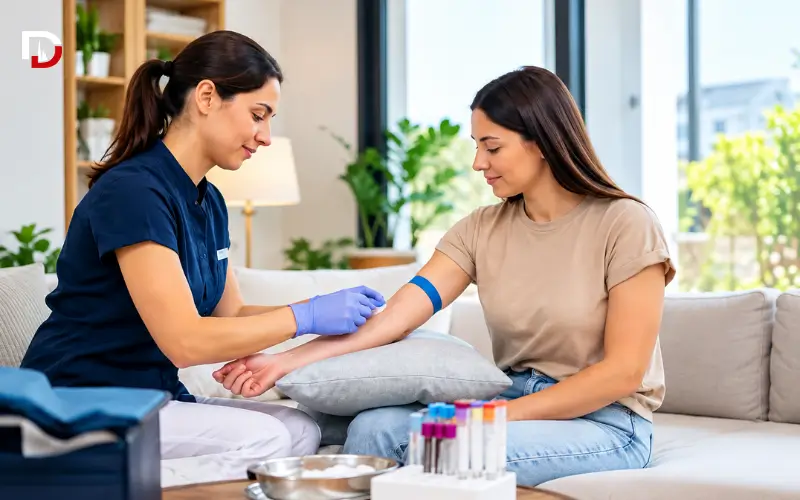
This is where doorstep sample collection has quietly changed the equation. When a trained phlebotomist comes to you, the biggest barrier to testing, which is the effort of getting there, disappears. This guide walks through how a lab test at home works, what it can and can’t do, how to prepare, and how to choose a provider you can trust.
How Doorstep Sample Collection Actually Works
This process is less complicated than most would believe and is the same lab work that occurs during a walk-in visit. There is no change in the collection point.
- Choose your tests. Choose individual tests or a package, preferably based on your doctor’s recommendations, your age, family history, or some symptoms you have noticed.
- Book a time slot. Most providers offer online scheduling and/or phone scheduling, and have an early morning time for fasting tests.
- A certified professional comes to visit. A licensed phlebotomist or nurse comes with their own single-use kits and checks your name upon collection.
- Samples are transported under controlled conditions. Blood, urine or swab samples are labelled at the scene and kept in temperature-controlled carriers in the laboratory.
- They are sent to the lab for analysis. Samples are analyzed on the same analyzers as are walk-in patients, and with the same quality controls.
- You are provided with a report digitally. The results typically come in via text message or email, and are often available 24 to 48 hours after the usual test. These special genetic or culture tests are more time-consuming.
The entire visit usually lasts for 10-15 minutes. No waiting room, no parking, and no need to rush back to the office.
What Can Be Tested Without Visiting a Lab
Most routine diagnostics are limited to a blood draw, urine sample, or swab and can be done at home. The most popular categories are listed here.
| Health area | Common tests | Sample | Why people book it |
| General health | Complete Blood Count (CBC), ESR | Blood | Screens for anaemia, infection and inflammation |
| Blood sugar | Fasting glucose, HbA1c | Blood | Detects prediabetes and monitors diabetes |
| Heart health | Lipid profile, hs-CRP | Blood | Assesses cholesterol and cardiovascular risk |
| Thyroid | TSH, Free T3, Free T4 | Blood | Explains fatigue, weight change, hair loss |
| Liver and kidneys | LFT, creatinine, urea, eGFR | Blood | Checks organ function, especially on long-term medication |
| Vitamins and minerals | Vitamin D, Vitamin B12, ferritin, iron | Blood | Very common deficiencies in indoor, air-conditioned lifestyles |
| Hormones and fertility | FSH, LH, AMH, testosterone, prolactin | Blood | Fertility planning, PCOS, menopause, low energy |
| Infections | Urine culture, STD panels, PCR swabs | Urine/swab | Discreet, fast diagnosis |
What requires a facility visit anyway: imaging (X-ray, ultrasound, MRI) etc., ECGs and stress tests, biopsies, bone marrow sampling and some “time-sensitive” tests like some arterial blood gas analyses. A reputable provider will let you know if the test you have selected cannot be administered at home.
Who Gains the Most From Testing at Home
Convenience is helpful to all, but it is a matter of life and death to some groups.
- Busy professionals. A 7 a.m. pick-up prior to work equals half a day missed from work because of clinic visits.
- The elderly parents and those who are not very mobile. No commuting and no long waiting in a packed room, and reduced risk of exposure to infections.
- Individuals with chronic diseases. Patients with diabetes, thyroid disorders, and kidney disease require monitoring to be repeated every couple of months. Frictionless check-ins mean you keep those checks on track.
- Young Children’s parents. A child is typically at ease when he is in his own environment, and it is easier for the child to have his blood drawn.
- Pregnant women. Normal antipregnancy examinations can be performed without additional travel, particularly in the third trimester of pregnancy.
- Anyone wanting privacy. Sexual health, fertility, and hormone tests can be extremely uncomfortable at any doctor’s office, but not at your own kitchen table.
- Families. Multiple family members can be included in one visit.
How to Prepare So Your Results Are Reliable
Location does not impact the accuracy; preparation does. This is a better sample than a clinic sample taken after a big breakfast at the clinic!
- Check fasting rules. Typically, fasting glucose and lipid profile results require 8–12 hours of no food intake. Plain water can be used; it will make the draw smoother. Most vitamin tests, thyroid tests, and the HbA1c do not require fasting.
- Mind the timing. Levels of cortisol and testosterone fluctuate during the day and are typically taken in the morning. Some hormone tests are taken on a particular day in the menstrual cycle, for example, FSH and LH.
- Communicate information about medicines and supplements to the collector. Hair/hormone supplements containing biotin can affect the results of thyroid and hormone tests. Never discontinue any medications without consulting your medical practitioner.
- Do not do strenuous exercise or drink alcohol within 24 hours. Strenuous exercise may increase muscle enzymes, including CK, and alcohol may impact liver enzymes and triglycerides.
- Drink plenty of water and wear loose-fitting clothing. Facilitates vein location and makes it more comfortable.
- When requested, obtain the first urine sample of the morning; for urine samples, follow the “midstream” instructions on the kit.
Is It as Accurate as Going to a Clinic?
Yes, if the sample is correctly collected, labeled, and transported. Either way, the analysis will be performed in an accredited lab. Bad handling is to blame for accuracy problems, not the direction of the needle.
This is why the provider must be more important than the format. Before getting a lab test at home, make sure they have the following:
- Licensing. The lab needs to be licensed by the relevant health authority in the UAE, which could be the Dubai Health Authority (DHA) or DOH in Abu Dhabi.
- Accreditation. The lab’s Quality processes are independently audited by International standards like ISO 15189 or CAP.
- Qualified collectors. The caller or person to visit should be a licensed phlebotomist or nurse, NOT a courier.
- Cold-chain transport. Inquire about the handling of samples from home to the lab.
- Clear pricing. If there is a fee for renting a home in the village, it should be mentioned before reserving.
- Secure, readable reports. Results should be delivered in a confidential manner, as well as providing a range, not just the number.
- Doctor access. The best services will have a consultation to discuss abnormal results.
In Dubai, for example, labs like Genex Lab combine DHA-licensed home collection with in-house analysis, so the sample never changes hands between unrelated companies. Whichever provider you pick, that end-to-end control is worth asking about.
Making Sense of Your Results
A report that doesn’t get the right next step is not worthwhile. When your own comes, here are some points to keep in mind.
- Reference ranges vary. Ranges are established by each lab depending on their equipment and methods. Check your answer with your own report (and NOT the one that you have seen online).
- A flagged value is NOT a diagnosis. A number can be slightly pushed out of the range due to hydration, recent meal or cold or hard workout. Doctors will often have to repeat a test before making a decision.
- Trends beat snapshots. HbA1c levels that have been between 5.4% and 5.9% over the past two years are a more meaningful indicator than either of these levels is on its own. Collate your reports so you can make comparisons.
- Discuss with your doctor. Self-testing is not a diagnostic test; it will not replace medical judgement. If something is outside of the normal limit, it must be seen by a professional.
- Act early. Plenty of early conditions, like prediabetes and low vitamin D or borderline cholesterol, can be reversed by making dietary, activity, and sleep improvements long before a need for medication.
How many times do you need to test? People in good health under age 40 usually do not require a check-up more than once a year. Those over 40, or with a family history of diabetes or heart disease, may need tests every six months. Individuals who have a chronic condition will need to go to the doctor on a schedule, which is typically every 3 months.
The Bottom Line
Preventing disease requires action, and that action does not take place unless preventive measures are taken. Sample collection at your door eliminates excuses for not going for the check-up and doesn’t reduce the quality of the lab test.
Use a licensed, accredited service, prepare correctly, and discuss with a medical professional. Repeat this process once a year, and you’ll be able to prevent the majority of health problems that are not obvious to the naked eye, but can be easily resolved with a little effort.
Must Explore: 20 Best Malls in Dubai
Frequently Asked Questions
Does a home blood draw hurt more than one at a clinic?
Are there more painful effects of a home blood draw than a clinic blood draw? No. It’s the same technique and the same needle. In fact, there are lots of people who find it easier as they are in their own space.
How long does a lab test at home take to report?
Typical laboratory tests like CBC, lipids, glucose, and thyroid typically come back within 24 to 48 hours. A number of days to a few weeks is required for the cultures, hormone panels and genetic tests.
Can I book without a doctor’s prescription?
Yes, for most wellness or routine tests. A doctor’s opinion can always help in selecting the best panel, and some tests are specialized or regulated and require a referral.
Is it safe to have a stranger collect samples at home?
Licensed providers are trained and certified healthcare personnel who have access to only single-use equipment for collecting. On arrival, they can be asked for their ID and license.
Is home testing more expensive?
The price for tests is typically the same as the price for walk-ins. Some charge a small visit fee, usually which is discounted for Package or minimum order.
Can children be tested at home?
Yes. Children’s drawings may be smoother at home, but it’s good to request a collector who is familiar with children.