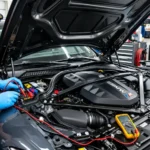







Audi’s modern vehicles feature many electronic systems that manage the engine, transmission, brakes, suspension, and safety equipment. If a warning light comes on, a preliminary check will not always be enough to pinpoint the problem.
With the right diagnostic tools, the technician can read fault codes, access real-time data, test systems, and understand how the vehicle is working. Audi specialist technicians should have specialist diagnostic tools, battery testers, oscilloscopes, programming tools, pressure testers, and other workshop equipment.
These tools are used by technicians to identify faults faster with a high degree of accuracy and also reduce the chance of replacing working parts.
Why Is Proper Audi Diagnostic Equipment Important?
Audi vehicles have complex electronic systems that control the engine, transmission, brakes, suspension, and other features. When a warning light appears, a basic inspection may not be enough to find the real cause.
Professional diagnostic equipment allows technicians to read fault codes, check live data, and test different vehicle systems. When choosing the best Audi workshop in Abu Dhabi, it is important to look for a facility with proper Audi diagnostic tools and trained technicians.
A professional scanner can help identify faults more accurately and reduce the risk of replacing working parts by mistake. This can save both time and repair costs.
Essential Diagnostic Equipment for Audi Specialists
1. Professional Audi Diagnostic Scanner
One of the most valuable tools in an Audi workshop is a high-quality diagnostic scanner. It enables the technician to communicate with various vehicles’ control units and read stored or active fault codes.
A professional scanner should be able to scan more than just the engine system. It should also enable systems like:
- Transmission
- ABS and brakes
- Airbag system
- Climate control
- Steering Suspension
- Body control
- Parking systems
A basic code reader will only give a general engine fault. This is because professional equipment will provide technicians with a much wider view of the vehicle.
2. VAG-Specific Diagnostic Software
Since Audi belongs to the Volkswagen Group, it’s possible to give more information than some general scanners can. Such software can interface with the Audi control modules and give access to the manufacturer-specific data.
It can assist technicians in viewing the values measured in the system, conducting system testing, checking the adaptation, and detecting faults that cannot be completely explained by the basic scanner. These kinds of apparatus are particularly helpful in complicated electronic issues.
Audi repair shop services that frequently work with Audi vehicles should own appropriate manufacturer-level or high-quality vehicles that can perform the same diagnostic functions as the VAG scan tool.
3. Battery and Charging System Tester
Many systems rely on stable electrical power, so that makes the battery a vital component of modern Audi vehicles. Several warning messages and abnormal electrical performance may occur if the battery is weak.
The battery can be tested by a professional battery tester to check its starting capacity and battery condition. The alternator and charging system should also be tested to ensure that the battery is receiving the proper charge.
This is important because one will not have a solution to the issue if the charging system is bad. With the proper testing, it will be possible to determine if the battery, alternator, wiring, or other electrical components are the causes of the problem.
4. Digital Multimeter
A digital multimeter is one of the fundamental and vital instruments in electrical diagnosis. It can be used to measure voltage, resistance, and electrical current depending on the equipment and test applied.
Electrical circuits connect a number of sensors, switches, motors, and control modules in Audi vehicles. Sometimes a component failure is not due to a failure in the component itself. It can cause similar symptoms if a fuse is blown, a poor ground connection occurs, or a wire is damaged.
A technician can use a multimeter to check the circuit and determine if the current is flowing to the right part of the circuit. This not only reduces the need to replace costly electronic components, but also lowers the cost of the services.
5. Automotive Oscilloscope
Technicians use an automotive oscilloscope to see the electrical signals in greater detail. A multimeter will give an indication of the amount of electricity being measured, while an oscilloscope will show the changes in the signal over time.
This is helpful for testing a range of electronic components such as sensors, ignition systems, injectors, communication circuits, and more. Certain faults occur for a brief period and may not be readily detected with a conventional scan tool.
An oscilloscope can be used to help a technician identify abnormal signals and to compare them with normal signals when troubleshooting hard-to-solve Audi electrical issues. This is useful for advanced diagnosis of electrical issues.
6. Smoke Machine for Leak Testing
Engine performance issues, rough idle, lack of acceleration, and warning lights are all issues that can be attributed to air leaks. It may be hard to locate a small leak from the engine bay.
The relevant system is filled with safe diagnostic smoke from a smoke machine. The technician will then find the hoses, seals, intake parts, or other areas that have smoke worms.
This equipment can be helpful for intake and vacuum system checks. It can also be used to identify some leaks in other systems of the vehicle if the proper test is performed. The precise leak can be determined much quicker than the replacement of parts based on symptoms.
7. Cooling System Pressure Tester
The cooling system is used to keep the engine cool. Leaks in a hose, radiator, water pump area, expansion tank, or seal can let coolant out and ultimately result in overheating.
The cooling system pressure tester can be used to place pressure on the system and determine if it will maintain that pressure. This will aid in locating hard-to-detect leaks when the engine is operating.
This is especially convenient in Abu Dhabi due to the high temperatures,s which put a strain on the cooling system. An early identification of coolant leaks can help avoid major engine damage.
8. Fuel Pressure Testing Equipment
The engine requires proper fuel pressure for operation. Too little or fluctuating fuel pressure can cause hesitation, poor acceleration, rough running, or a failure to start the Audi.
A pressure testing apparatus can be used to determine if the fuel system is operating in the correct pressure range. For the various Audi models, further equipment may be required to test various components of the fuel system.
Ignition and sensor trouble sometimes can be confused with fuel issues. When testing fuel pressure, the tech is able to eliminate one cause from another and prevent unnecessary part changes.
9. Transmission Diagnostic Equipment
Audi uses various transmissions in its models,s and each transmission may have its own diagnostic needs. The transmission could experience a problem that leads to delayed shifting, hard or erratic shifting, slipping, ng or warning indicators.
Transmission control modules can be accessed by specialist diagnostic equipment, which can read fault codes, display operating information and execute some adaptation or service operations. This is relevant in the case of complex gearbox problems.
The information obtained from a general engine scanner may not be sufficient to diagnose the transmission. A specialist workshop should be equipped for the specific type of Audi gearbox being tested and should include electronic testing and mechanical testing.
10. Coding and Adaptation Tools
In some circumstances, a repair for a problem with a car’s Audi will be greater than just replacing a defective part. Some parts may require coding, programming, and/or adaptation post-installation. This may include control modules, batteries, steering parts, and other electronic parts by model.
Technicians are able to program parts properly and perform necessary procedures with appropriate coding tools. Some systems can be trained to their target operating values after a service or repair using adaptation tools.
A new installation component might not function as intended without the proper equipment. Owners should look for a workshop that is knowledgeable in Audi electronics, rather than just mechanical repair, for this reason.
Read More: Temu Coupon Code 2026
Conclusion
Audi requires more than a simple code reader from its specialist technician. Important tools for accurate diagnostics include professional diagnostic scanners, specialized software from the Volkswagen Group, battery testers, multimeters, oscilloscopes, smoke machines, cooling system pressure testers, fuel pressure gauges, transmission equipment,t and programming tools.
Technicians who can interpret results and then test to ensure further testing is completed must be well versed in the use of this equipment. Having the proper tools and knowledge in the workshop speeds up the process of diagnosis and can prevent needless repairs to the vehicle for Audi owners. The initial step in maintaining an Audi reliable, safe,fe and ready for the road is proper diagnostics.