






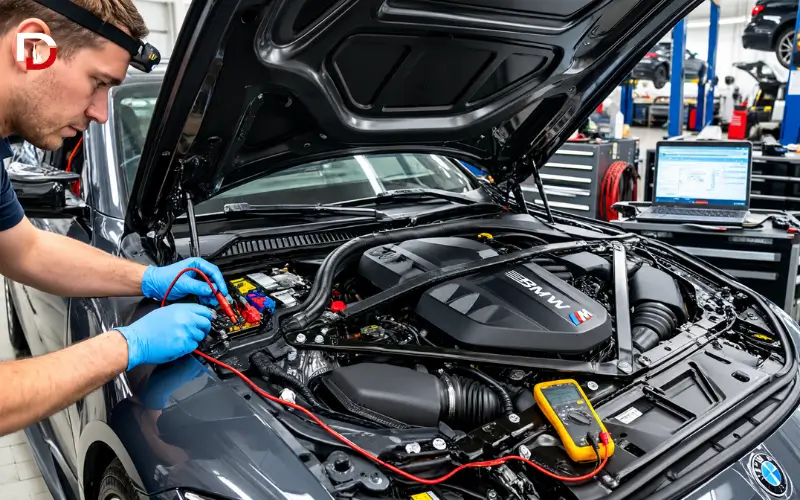
BMW cars use many electrical parts to function and manage various systems. A small electrical problem can result in unexpected behavior that could be misdiagnosed as a mechanical problem.
If you have trouble starting the vehicle, warning lights come on, lights flicker, or some electrical equipment no longer works, you probably have an electrical issue. Other indications are: weak battery, alternator failure, damaged wiring, blown fuses, sensor failure, electronic control unit problems. These warning signs are indicators that will help you stop your car from failing because of some minor electrical problem.
What Are the Common Signs of a BMW Electrical Problem?
It is easier to make the decision when the car requires professional attention when you know the signs to look for. Failure to take note of the persistent electrical signs may also be of some difficulty in the diagnosis more difficult later.
1. A Weak Battery Can Cause Several Electrical Problems
Normally, the battery powers the BMW during start-up and during the operation of the electrical systems when the engine is not running. The car might take longer to start up, or fail to start altogether as its battery gets weaker.
Other symptoms include dim lighting in the interior, slow window operation,n and strange warning messages. Several electronic systems will act up due to the absence of a steady voltage.
Heat also has the potential to reduce battery life. When the battery repeatedly starts up problems, it is best to test the battery rather than continually perform a jump-start.
2. Dim or Flickering Lights May Point to a Fault
Stable electrical power is required for headlights, interior lights, dashboard lights,s and other lighting systems. When the engine is operating and the lights grow dim or flicker, the charging system, battery, wiring, ng or electrical connections could be at fault.
The flickering may be more apparent when the AC, headlights, or other high-power settings are activated. Unstable power can also be caused by a loose battery terminal.
Never dismiss continual lighting changes, particularly in conjunction with warning lights or starting troubles. A voltage test may be useful in determining the source.
3. A Failing Alternator Can Drain the Battery
When the engine is running, the alternator maintains the charge on the battery and provides electrical power to the vehicle.
A weak or failed battery can cause the battery to gradually discharge. This can lead to dim lighting, warning indications, trouble starting, and even electrical outages. A battery or charging warning may appear on the dashboard of BMWs.
A failing alternator can mean that you might not be able to restart your car when you stop. When testing the alternator and battery state of charge, it provides a better picture of the charging system.
4. Warning Lights Can Indicate an Electrical Fault
Warning lights and warnings are used in modern BMWs to alert the driver to an issue in the system. Sometimes a battery warning, engine light, ABS warning, airbag warning, or other warning is related to an electrical problem.
Do not assume that a warning equals failure of the part it is related to. The warnings may also be caused by low voltage, damaged wiring, or communication issues.
That’s why even if the light on the dashboard is on, replacing a component might not be the solution. A diagnostic scan can be used to look for stored fault codes and to determine which system requires further testing.
5. Electrical Windows, Locks, or Seats May Stop Working
Electrical motors, switches, control units, and wiring are vital to power windows, door locks, mirrors, seats,s and other comfort features. If the fault occurs in one feature, it might be a problem with that system.
If multiple features begin to fail simultaneously, however, a larger electrical problem could exist. Several functions can be impaired because of a blown fuse, damaged wiring, poor battery connection, or communication issues.
Be sure to notice if it is one of the doors or multiple components of the car. This information can be used to help a technician focus his investigation.
6. Strange Dashboard Behavior Should Not Be Ignored
If multiple warning lights appear on a dashboard, the clock resets, the dashboard goes blank,ank or the reading is strange, there may be an electrical issue. These symptoms can be caused by unstable voltage or communication problems between the control units in the car.
The issue can occur on start-up and then go away. Although it may appear normal when the machine is restarted, a stored fault may still exist.
If dashboard issues repeat, be sure to check them, as modern BMW systems rely on the communication between numerous electronic modules. A bigger electrical fault can be avoided if it’s diagnosed early.
7. Blown Fuses Can Point to a Deeper Problem
Fuses are used to prevent overloading an electrical circuit. If a fuse blows, it could prevent a particular feature from functioning. The fuse can be replaced to restore its function, but not necessarily resolve the underlying cause of the fuse failure.
If the fuse blows again, it could be a short circuit, damaged electrical wiring, or a problem with the electrical component. It can cause additional issues if new fuses are continually being installed without determining the cause.
A technician should check the circuit and determine what is causing the excessive current to flow through before making additional repairs.
8. Damaged Wiring Can Create Hard-to-Find Faults
BMWs have an intricate web of wiring linking the battery, sensors, lighting systems, control units, motors, and more. Causes of damage to wiring include heat exposure, moisture, wear, poor connections, and physical damage.
A broken wire could result in a partially functioning system, making it harder to determine the issue. Similar symptoms can be caused by loose connections. Faults in the wiring may not be visible from the outside.
To ensure safety, proper testing with electrical tools will usually be required to check the voltage, resistance,nce and continuity across the affected circuit.
9. Sensor Problems Can Cause Unusual Vehicle Behavior
BMW engines and safety systems rely on numerous sensors to measure temperature, pressure, speed, position, and various other conditions. A control unit may react inappropriately if the sensor provides inaccurate data.
This may result in warning lights, engine performance issues, unusual gear changes, or issues with safety systems. Sensors can go bad due to contamination, wiring damage, heat, and/or age.
But a fault code from the sensor does not necessarily indicate that the sensor requires replacement. The power supply and wiring should also be checked prior to the fitting of a new part.
How Can You Check for an Electrical Problem?
If signs of electrical symptoms are seen, begin by identifying patterns. Observe the occurrence of the problem and the involved systems. Do you find, for instance, that the car won’t start in the morning? Do the lights flicker when the AC is turned on? Are multiple warning lights on at the same time?
Useful checks include:
- Measuring the voltage of the battery
- Checking the output of the alternator
- Inspecting battery terminals
- Checking relevant fuses; looking for fault codes in storage
- Visually checking wiring and connectors
- Testing for multiple electrical system failures in unison
These tests can give helpful clues, but more severe faults may require professional diagnostic equipment.
Why Should You Get Electrical Problems Checked Early?
A small electrical problem can sometimes affect other parts of the vehicle. For example, a weak battery may create low voltage that causes several control units to report faults. A damaged wire can also create intermittent problems that become worse over time.
Delaying repairs may leave you with a car that will not start or important features that stop working when you need them. If you are looking for a BMW garage in Abu Dhabi, choose a workshop that has BMW-compatible diagnostic equipment and technicians who understand modern electrical systems.
Read More: Hatta festival
Final Thoughts
BMW electrical problems can present themselves in many different ways, and you may see some of the following signs: trouble starting the car, light flickering, warning message, the car won’t charge, windows or locks malfunction, fuses keep blowing, wiring is damaged, sensor failure, or communication failure between control units.
One symptom can be caused by many different problems, so parts replacement without proper diagnosis could be a waste of time. So, if electrical issues continue, it’s best to have the vehicle tested and diagnosed by a professional, as early detection will save the electronic systems and prevent future vehicle failures.