





Industrial liquids distribution centers that have to deal with huge volumes on a daily basis can find it difficult to keep and move these liquids safely; storing them improperly can result in spills, broken containers, loss of product and delays in operations.
By carefully choosing container types, designing efficient storage strategies, improving handling procedures, and establishing safety guidelines, distribution centres can enhance these processes. Moreover, correct label placement, periodic checks, employee training, and strategic transportation management contribute to risk reduction, maintaining product quality, and optimizing the daily operations.
Practical Ways to Improve Liquid Storage and Movement
The right storage and handling system can make a major difference in a busy distribution center. Instead of treating storage and movement as separate tasks, managers should plan them as one process.
The following areas can help facilities reduce waste, improve safety, and make better use of available space.
1. Choose Containers Based on the Liquid
Different liquids need different types of containers. Before selecting storage equipment, a facility should check the liquid’s nature, weight, temperature needs, and chemical properties.
Some products may need containers that resist corrosion, while others may need stronger protection from heat or sunlight. Container size also matters because oversized units can waste space, while very small units may increase handling work.
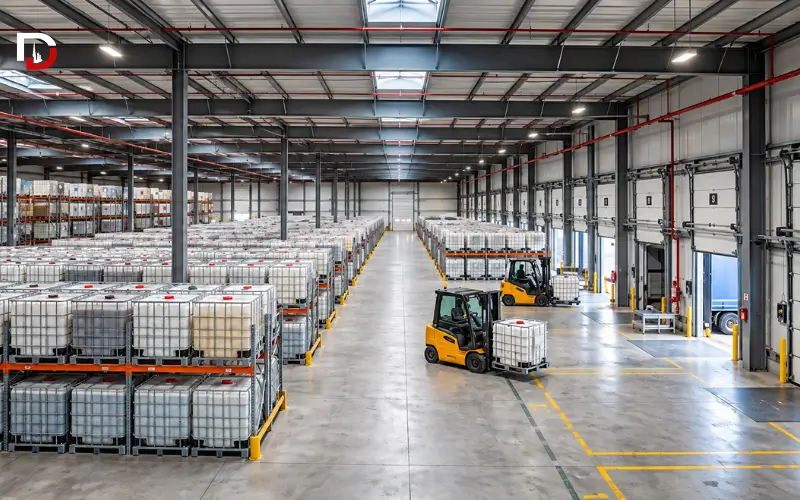
An IBC tank can be useful for many bulk liquid applications because it provides a practical way to store and move large quantities while making good use of floor space.
2. Create a Clear Storage Layout
A well-planned layout helps workers find products quickly and move them without crossing busy work areas. Storage zones should be arranged according to liquid type, container size, movement needs, and safety requirements.
Frequently moved products can be placed closer to loading areas to reduce travel time. Heavy containers should be kept in locations where they can be handled safely.
Clear aisles should also be maintained between storage rows. A simple layout can reduce unnecessary movement and help workers complete loading and unloading tasks with fewer delays.
3. Separate Liquids That Should Not Be Stored Together
Some liquids can react when they come into contact with each other. Storing incompatible products too close together can increase the risk of fire, chemical reactions, or harmful leaks.
Distribution centers should group products according to their properties and keep incompatible materials in separate areas. Secondary containment can also help control a spill if a container fails.
Storage signs should clearly show what type of liquid is kept in each zone. These steps make it easier for workers to identify risks before moving or handling a container.
4. Improve Labeling and Product Identification
Clear labels help workers know what they are handling before they move a container. Labels should provide important details such as product name, handling instructions, hazard information, storage conditions, and batch details where needed.
Large and easy-to-read markings are useful in busy warehouses because workers may need to identify products quickly. Barcode or digital tracking systems can add another layer of control.
When every container has a clear identity, the facility can reduce picking errors, improve stock records, and make it easier to trace products through the distribution process.
5. Use Safer Equipment for Moving Containers
Moving heavy liquid containers by hand can create safety risks and slow down warehouse work. Distribution centers should use suitable equipment such as forklifts, pallet trucks, lifting tools, pumps, and transfer systems based on container type and weight.
Equipment should be rated for the loads being handled. Workers should also check that containers are stable before moving them.
Sudden turns, poor stacking, and excessive speed can cause containers to shift or fall. Using the right equipment helps protect workers, containers, and the liquid inside them.
6. Build a Strong Spill Control System
Spills can damage products, floors, equipment, and nearby containers. A distribution center should have a clear spill response plan before an incident happens. Spill kits should be kept close to areas where liquids are stored or transferred.
Workers should know how to isolate the affected area and report the event. Drain protection may also be needed for certain products.
Secondary containment systems can limit the spread of liquid after a leak. Regular inspections can help find damaged containers, loose fittings, or other problems before they lead to a larger spill.
7. Control Temperature and Environmental Conditions
Some industrial liquids can change when exposed to high heat, freezing temperatures, moisture, or direct sunlight. Storage areas should therefore match the conditions needed for each product.
Temperature-sensitive liquids may need controlled storage, while other products may simply require protection from direct heat. Ventilation can also be important for products that release vapors.
Managers should check storage conditions regularly instead of assuming they remain stable throughout the year. Proper environmental control can help protect product quality and reduce the chance of container damage or unsafe conditions.
8. Train Workers on Handling Procedures
Even the best storage system can fail if workers do not know how to use it correctly. Staff should receive training on container handling, product identification, spill response, loading methods, and safe equipment use.
Training should match the types of liquids handled at the facility. New workers should receive basic instruction before starting their duties, while existing staff should receive refresher training when procedures change.
Simple signs and written instructions can support daily work. A trained team is more likely to spot problems early and respond correctly when an issue occurs.
9. Track Stock and Movement Digitally
Digital tracking can give distribution centers better control over liquid inventory. A warehouse system can record where a container is stored, when it arrived, how much stock remains, and when it was moved.
Barcode and RFID systems can reduce manual entry and improve accuracy. Digital records can also help managers identify slow-moving products and plan future storage needs.
When inventory information is easy to access, workers spend less time searching for containers. Better tracking also helps reduce misplaced stock and supports more accurate order planning.
10. Plan Loading and Unloading Carefully
Loading and unloading are important points in the movement process because containers can be damaged if they are handled poorly. Distribution centers should create clear loading zones and keep them free from unnecessary traffic.
Workers should check containers for visible damage before they are moved onto vehicles. Loads should be positioned securely so they do not shift during transport.
The loading plan should also consider vehicle capacity and the order in which products will be delivered. Careful planning reduces delays and lowers the risk of damage during dispatch.
11. Inspect Storage Areas Regularly
Regular inspections can reveal small problems before they become costly incidents. Workers should check containers, valves, fittings, pallets, racks, floors, and containment systems as part of routine inspections.
Any signs of cracks, corrosion, leaks, or damage should be reported quickly. Storage areas should also be checked for blocked aisles, poor labels, and unsafe stacking.
A simple inspection checklist can make these checks easier to complete. Keeping records of inspection results allows managers to see repeated problems and take action before they affect daily operations.
12. Reduce Unnecessary Handling
Every extra movement creates another chance for a container to be damaged or misplaced. Distribution centers should aim to move products only when necessary. Storage locations can be planned around order frequency, delivery routes, and product demand.
Fast-moving products may be placed closer to dispatch areas, while slow-moving stock can use less accessible storage space.
Transfer equipment should also be positioned near areas where it is regularly needed. Reducing unnecessary handling can save labor time, limit equipment use, and lower the chance of spills or container damage.
Must Explore: Amazon UAE
Final Thoughts
Improving the storage and transport of industrial liquids goes beyond simply purchasing more durable containers; distribution centers require an integrated system encompassing storage layout planning, product segregation, labeling, handling equipment, spill control, personnel training, inventory tracking, and periodic inspections.
These elements work in concert; when implemented simultaneously, they enable facilities to minimize product loss, enhance worker safety, optimize space utilization, and ensure a continuous flow of goods with minimal delays. Furthermore, this systematic approach allows distribution centers to more easily manage fluctuations in workload and accommodate new liquid products as business needs evolve.