






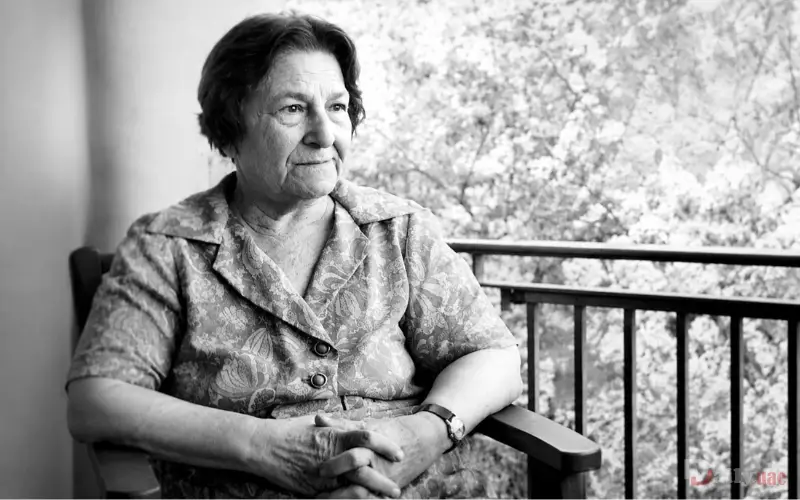
Dr. Saniya Habboub was the first Lebanese woman to do medical studies abroad, graduating in 1931 from the Medical College of Women of the University of Pennsylvania. The news of her began radiating again in June 2022, when Google had a special doodle for the occasion.
A quick clarification before her story begins: This is a quick clarification in case people weren’t already familiar with the name. Habboub is a 20th-century character who eventually died in 1983. A couple of unsourced pages of biography have cropped up on the web linking her name to a locality from today’s era, but under no valid record links her to that location.
Quick Facts
| Quick Fact | Detail |
| Full Name | Saniya Moustafa Habboub (سنية حبوب) |
| Born | 1901, Beirut, Lebanon |
| Died | September 1983 |
| Field | Gynecology & Obstetrics |
| Education | American Junior College for Women (1926), American University of Beirut, Women’s Medical College of Pennsylvania (MD, 1931) |
| Known For | First Lebanese woman to study medicine abroad; pioneer of women’s healthcare in the Arab world |
| Practice Founded | 1933, Bab Idriss, Beirut |
| Major Honor | Lebanon’s Health Medal of Merit (1982); Google Doodle tribute (June 10, 2022) |
Early Life and Family Background
Saniya Moustafa Habboub was born in Beirut in 1901. According to her biographical profile alongside Google’s 2022 tribute, her father, Moustafa Habboub, was a leather merchant, and her mother’s name was Adla al-Jazairy; she was of Turkish descent.
Professional training for girls was not guaranteed at the time, even less so formal schooling, in Beirut. Habboub was raised in one of the families that made an exception, in which education took precedent.
Timeline at a Glance
| Year | Milestone |
| 1901 | Born in Beirut, Lebanon |
| 1926 | Graduated from the American Junior College for Women (AJCW) |
| Late 1920s | Continued studies at the American University of Beirut (AUB) |
| 1931 | Earned her MD in gynecology and obstetrics from the Women’s Medical College of Pennsylvania |
| 1932 | Completed additional internship training in the US; returned to Lebanon |
| 1933 | Opened her own clinic in Bab Idriss, Beirut |
| 1982 | Awarded Lebanon’s Health Medal of Merit |
| 1983 | Passed away in September, roughly a year after the award |
| 2022 | Honored with a Google Doodle on June 10, marking her 1931 graduation |
Breaking Into a Field Closed to Women
Habboub was one of the first three pupils to graduate from the American Junior College for Women (AJCW) in Beirut in 1926 before furthering her education at the American University of Beirut (AUB).
In those days, medical schools at AUB did not admit women, which meant she had only two options: leave medicine or depart the country to study medicine. She selected the latter after being fascinated by reports of a Syrian doctor trained in America who returned to his home country.
Studying at the Women’s Medical College of Pennsylvania
Habboub is a graduate of the Women’s Medical College of Pennsylvania of 1931, with a degree in gynecology and obstetrics. According to the National, she was alone among all the Arab students of the school that year.
She was recognized for her achievement with the college’s invitation to have a Lebanese historian, and Professor at Princeton University, come on campus and deliver the college’s commencement address, an unusual occurrence for one graduate, common to making her very contribution understood at the time, according to Arab News’ coverage of the 2022 Doodle to commemorate her.
According to Google’s official Doodle biography, after returning to Beirut, she trained as an intern in the US until 1932 in gynecology and obstetrics. Out of her appreciation for what education had done for her, she ultimately endowed her own scholarship at the college.
Why Her Medical College Was Unique
The school that Habboub had gone to was historic itself. The Philadelphia Encyclopedia of Greater Philadelphia and the college’s own recorded history identify it as the founding of the Female Medical College of Pennsylvania, the first female medical college in the world to be founded specifically to grant women the doctorate of medicine degree, in 1850 in Philadelphia by a group of Quaker reformers.
When Habboub joined the school in the late 1920s, the renamed Woman’s Medical College of Pennsylvania had been educating women physicians from around the world for some 80 years, with a number of graduates practicing abroad. Habboub’s academic credentials had put her in that particular branch of international women who were educated at one of the few schools that would allow it.
Read Also: Ousha Al Suwaidi Biography
Lebanon’s Educational Landscape for Women in the 1920s
However, it should be taken into account that Habboub had no choice but to study abroad, given the educational avenues at her disposal at the time. In addition to undergraduate degrees, the establishment of the mission and community colleges, such as AJCW, provided women with education in other faculties like medicine and law, which were usually closed to them because of the grading systems.
Prolonged closed grade systems prevented women from pursuing such courses of study as medicine and law, so the mission and community colleges, such as AJCW, also provided women with undergraduate education.
It was a later decade before the medical education of the internationally renowned Arabic education hub, AUB, was liberalized to admit women. A requirement for a woman wanting to be a doctor in the late 1920s was an overseas degree, not just the best option, but the only option.
Returning to Beirut and Opening Her Practice
In 1932, Habboub moved back to Lebanon and established a clinic in her own name in 1933 in the neighborhood of Bab Idriss in Beirut.
There was no jubilation or congratulations received at once. Many of the early patients claimed she was a midwife and not a qualified doctor,r as there were no women doctors around at the time. Not through her qualifications but through the quality of her career, recognition slowly came.
Public and Humanitarian Work
Habboub’s work went beyond her own clinic to the civic institutions prevailing in Beirut at the time. According to the official Google Doodle biography, created for her 2022 tribute, she was the following:
- Co-founder of the Lebanese Red Cross (Red Crescent) Association
- He was a member of the Board of the Muslim Orphans’ Home. He was a member of the Board of the Muslim Orphans’ Home.
- A member of the board of the Young Muslim women’s association and Maqassed Hospital
In these roles, her name fell in with many who were beginning to define the humanitarian scene in Beirut in the early 20th century, well beyond being a doctor. Maqassed Hospital in Beirut was, in particular, one of the older charitable medical centres in Beirut, and a board position at its ear-a level within the medical establishment of Beirut – indicated standing, not only in the women’s organisations.
Common Misconceptions About Dr. Saniya Habboub
For many years, her name keeps coming around about her Doodle anniversary, and there are a few misinformation pieces out there about her story. But let’s take the ones most likely to be asked straight on the chin.
It is incorrect to state that she is a practising gynecologist in Dubai. Nothing is known about her career in any place other than Beiru,t and she passed away in 1983.
To be honest, the word “some” is not precise here because she clearly attended “some of the best institutions in the Middle East.” She was trained in Beirut for her undergraduate studies, but her medical degree, the qualification to become a doctor, came from the Women’s Medical College of Pennsylvania in the US, where, at the time, no institution in the Middle East would have trained her in medicine.
I also found she was in Dubai only as a “gynecologist in Dubai for women’s health,” and no actual history can be discerned beyond the generic service page text.
She has studied medicine in Philadelphia and worked there after graduation, and organized public health services in Lebanon, from the 1930s till she died in 1983, as a competent physician who was born in Beirut and trained there.
Read Also: Tariq ibn Ziyad
National Recognition and Honors
The award of the Health Medal of Merit by the Lebanese government in 1982 to Habboub, after more than 50 years of medical practice, was officially confirmed in Google’s Doodle biography of her and in the article on “Tribute to Habboub” on UAE Moments, marking her dedication and contributions to public health and women’s empowerment in the medical field.
For an individual physician in Lebanon, a state medal of this magnitude was rare and unusual both then and now, as the award was the result of an absence of availability from another government-operated institution—a university, AUB in this case—in the first place, and a recognition from the State itself in the second.
The 2022 Google Doodle Tribute
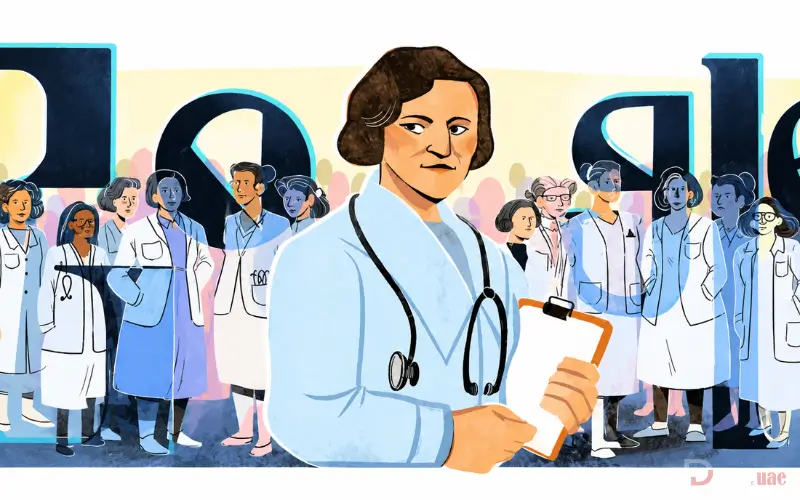
On June 10, 2022, Google celebrated Habboub’s 1931 graduation with a Doodle, sharing her story with people who probably weren’t exposed to it before.
The tribute was reported by the same news magazines in Dubai that covered it, directly under the title of the Arab News Media Desk. The National reported the same graduation date, and stated she dropped off a scholarship at her original school as thanks. Google accounts for the same information about her early schooling as does the AJCW and The961.com report, which was posted separately.
Why Her Name Comes Up in UAE and Gulf Coverage
There is no biographical connection between Habboub and the UAE; she was a Lebanese artist, working just in Beirut. Her presence in Gulf media is due to context, not location, as Arab News’ Dubai bureau took on her 2022 Doodle, in keeping with the interest of the rest of the region in the stories of advancement of the Arab woman.
There’s a measurable counterpart today in that framing. UAE Ministry of Human Resources and Emiratisation data on the labour market from 2025, which has been cited by regional media when citing pioneers such as Habboub, showed that women made up 66.5 percent of healthcare workers in the UAE in 2025.
Legacy: Four Ways to Read Her Story
Habboub’s impact is a blend of two attributes uncommon in her time: medical acumen and an enduring public service career. She was not just a doctor; she helped pay the tuition of future students through her fund for students in Pennsylvania, and she served as a director of several organizations in Beirut. It can be interpreted in four different ways. The facts can be utilized through four distinct lenses.
Medical Impact
In this way, Habboub serves as an early marker in the Arab world of women’s access to a formal training in gynecology and obstetrics, a specialty that at the time was only provided by a woman of the house, or male physicians and midwives, rather than a formally trained woman doctor.
Educational Impact
Her experience at AJCW led to her enrollment at AUB and ultimately at the Women’s Medical College of Pennsylvani, which reflects a real series of limited options open to an ambitious Lebanese woman in the 1920s—and how she could make a career closed at home open by taking one overseas path to a new education?
Historical Importance
Yet her story is frequently included in wider narratives of early-20th-century Arab women that sought professional and academic roles elsewhere than their own country, alongside only a handful of other women whose accomplishments remain largely under-documented.
Leadership Legacy
The importance of institutional involvement is echoed in her multiple roles simultaneously as a physician and a board on the Red Cross, an orphanage, and a hospital. It’s a template that fits the description of health care leadership as it has come to be known today: the management of patient care and organizational responsibility simultaneously.
What sets her story above so many “pioneer” stories is the detail: specific institutions, specific time of events are well documented, and the government was the institution that bestowed her honor, not the posthumous fan. It is just this sort of detail that differentiates her story from the thinner, undated pages of her biographies that are now being found online.
Must Read: Asma Hamza Biography
FAQs
Who was Dr. Saniya Habboub?
The first Lebanese woman to get a Doctor of Medicine degree abroad was in 1931 from the Women’s Medical College of Pennsylvania.
Why is Dr. Saniya Habboub famous?
Her greatest success was to penetrate a closed world to women at home, and then re-enter and establish a career as a clinical and humanitarian worker in Beirut.
What did she actually achieve?
She received her MD in gynecology and obstetrics in 1931, a Beirut clinic in 1933, co-founded work for the Red Cross, a nd in 1982, Lebanon’s Health Medal of Merit.
Was she the first Arab woman doctor?
No, some sources make it clear that she wasn’t the first Arab woman doctor; she was the first female student learning medicine abroad in Lebanon.
When was she born, and when did she die?
Born in Beirut in 1901, she died in September 1983.
Where did she study medicine, and why did she go abroad?
She attended AJCW and AUB in Beirut, received her MD in the USA after AUB would not admit female students to medical school.
Where did she practice medicine after returning to Beirut?
In 1933, she established her own clinic in Baby Issa, one of Beirut’s neighborhoods.
Why did Google honor her with a Doodle?
According to Google, in 2022, they celebrated her on June 10 as an early medical pioneer from Arabia, which was inspired by her 1931 graduation.
Is she connected to the UAE or to any modern-day clinic?
No — she only practiced in Beirut and passed away in 1983; some pages of biographies contain factually incorrect information about the presence of a clinic.



2 Comments
Urology and Anesthesia Care in Abu Dhabi
July 22, 2026[…] their expertise to the Gulf. Among the practitioners making a meaningful impact in the field, Dr. Saniya Habboub has been recognized for her contributions to urological care in the UAE, reflecting the broader […]
Khalid Al Ameri Biography | Wife, Children And Latest News
July 22, 2026[…] Read More: Dr.Saniya Habboub Biography […]