



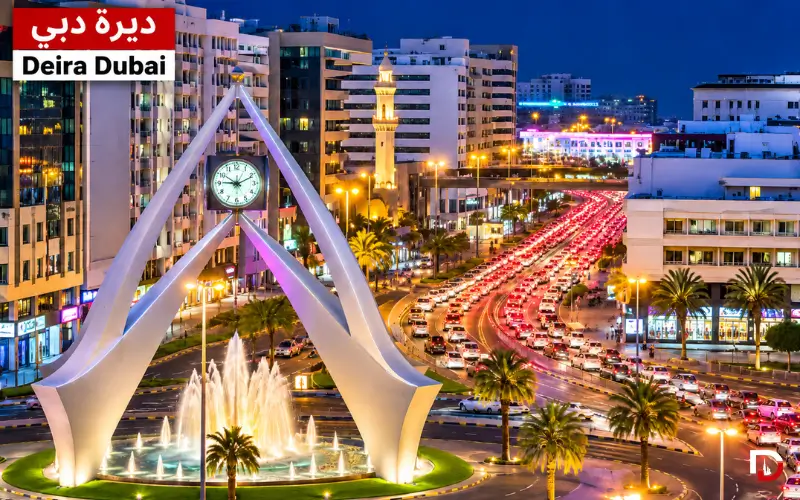
Deira is where Dubai’s trading heritage remains part of everyday life. Along the banks of Dubai Creek, traditional souks, historic trading streets and busy neighbourhoods reflect the district’s roots as a major commercial centre. At the same time, modern hotels, shopping malls and restaurants show how it has adapted to the city’s growth. From exploring the Gold Souk and crossing the creek by abra to finding a place to stay or live, Deira, Dubai offers a different perspective on the city one shaped by local culture, commerce, and daily life rather than skyscrapers and luxury developments.
Quick Facts
| Detail | Information |
| Emirate | Dubai, United Arab Emirates |
| Geographic position | Northeastern side of Dubai Creek |
| Opposite historic district | Bur Dubai |
| Main attractions | Gold Souk, Spice Souk, Perfume Souk, Dubai Creek and Deira Clocktower |
| Major shopping destinations | Naif Souk, Waterfront Market and City Centre Deira |
| Metro connections | Red Line and Green Line |
| Main interchange | Union Metro Station |
| Airport access | Close to several central neighbourhoods |
| Best outdoor visiting season | November to March |
| Suitable for | Market shopping, heritage visits, short stays, business travel and local exploration |
What Makes This Historic District Famous?
Traditional souks are the primary places where many visitors connect with the region. The Gold Souk, Spice Souk, and Perfume Souk attract shoppers looking for jewelry, spices, oud, fragrances, and locally available products. Their narrow shopping lanes and independent retailers offer an experience distinct from the large malls found elsewhere in the city.
Dubai Creek is equally significant to the city’s identity. Traditional wooden *abras* (boats) still ferry passengers between the two banks, while commercial vessels continue to utilize the waterway. The waterfront offers visitors a glimpse into the maritime trade that contributed to the city’s development.
This area features not only historical markets but also hotels, supermarkets, restaurants, offices, and residential buildings in the surrounding neighborhoods. Together, these elements create a bustling urban environment where tourism and daily life intersect.
Visitors usually come for a mix of experiences:
- Traditional shopping: Jewellery, spices, perfumes, clothing, gifts and souvenirs.
- Heritage and waterfront visits: Dubai Creek, abra crossings and historic market streets.
- Accommodation: Hotels in different neighbourhoods and price categories.
- Everyday convenience: Metro stations, buses, taxis, shopping centres and access to the airport.
Location and Geographical Boundaries
This area is situated on the northeastern bank of Dubai Creek, directly opposite Bur Dubai. It forms part of the city’s historic urban center and extends inland toward Dubai International Airport, while its northern sections reach the coastal part of Dubai.
Sometimes, this name is applied to a broad collection of neighborhoods rather than a single, specific area. Districts such as Al Ras, Al Sabkha, Naif, Al Rigga, and Al Muraqqabat each possess their own distinct characteristics, shops, and residential streets. Major roads and a public transport network connect these areas; however, the distance from any given point—such as tourist attractions or other key landmarks can vary.
Main Neighbourhoods
| Neighbourhood | General character |
| Al Ras | Historic market area near the creek, Gold Souk and Spice Souk |
| Al Sabkha | Traditional commercial and residential locality near the creek |
| Naif | Busy shopping district with traditional retail streets and residential buildings |
| Al Murar | Established northern neighbourhood with shops, apartments and local services |
| Al Rigga | Commercial and dining area with hotels and Metro access |
| Al Muraqqabat | Mixed residential and commercial district with hotels, restaurants and shopping |
| Al Muteena | Established residential and commercial community |
| Port Saeed | Business, hotel and shopping area near City Centre Deira |
| Rigga Al Buteen | Creekside locality with offices, hotels and commercial properties |
Bur Dubai is situated across the Creek, while Al Garhoud is located closer to the airport. Al Qusais and Al Nahda are further inland, towards the Dubai-Sharjah border, whereas Al Mamzar is located along the northern coast.
It is important to keep these distinctions in mind when booking accommodation. A hotel might claim to be located in a major area, yet in reality, it could be several kilometers away from the Gold Souk or the nearest metro station. Therefore, always check the full address of the property and its precise location on a map before making a booking.
History and Cultural Importance
Dubai Creek shaped the development of the city’s early commercial communities. Fishing, pearling, and maritime trade sustained local enterprise, while merchants brought in goods from across the Gulf, the Indian subcontinent, and other trading regions. The waterway provided a space for merchants to transport goods and connect with customers on both banks.
Commercial activity flourished along the northern bank of the Creek, while Bur Dubai developed on the southern bank. Boats ferried passengers and goods between the two communities, linking their respective markets and businesses. The Creek influenced where merchants established their shops, where goods were stored, and how the surrounding streets took shape.
Glimpses of an ancient commercial culture can still be seen in the bazaars. Gold retailers, spice merchants, textile sellers, and perfume shops continue to serve both residents and tourists to this day. These commercial activities maintain a living connection between the area and its past, ensuring that its history is not confined merely to museums or cultural exhibitions.
The Deira Clocktower is another well-known landmark. According to the United Arab Emirates Ministry of Culture, it was built in 1968, while the Dubai Municipality identifies it as a significant site constructed in 1963. Given that these official sources provide conflicting dates, it is more appropriate to describe it as a landmark from the “1960s,” thereby avoiding the need to designate any single, contested year as the definitive one. Located at a major road junction near the Al Maktoum Bridge, it is deeply linked to the city’s early modern development.
Also Explore: Satwa Post Office Dubai
Best Places to Visit
Key attractions are located around the markets along the Creek, the main shopping streets, and the northern commercial districts. Tourists can walk between several traditional markets (souks); however, for destinations further away, it is more convenient to travel by taxi or metro.
Dubai Gold Souk
The Gold Souk is one of the city’s most renowned traditional markets. The shop displays here feature gold jewelry, diamonds, silver items, and precious stones, with designs ranging from traditional regional styles to the latest contemporary collections.
Even if you do not intend to purchase jewelry, you can still visit simply to browse. If you are planning to buy, compare prices across different shops and ask each seller for details regarding the weight of the gold, its purity, the current market rate, and the making charges. Before finalizing your purchase, request a detailed receipt and verify the shopkeeper’s reputation or credentials.
The daily gold rate influences the price, but the final amount also depends on the design and workmanship. Some retailers may negotiate on making charges, although the underlying gold rate is not simply a matter of bargaining.
Getting there: Al Ras and Gold Souq stations on the Green Line are useful for reaching the market. Choose the station according to the shops or entrance you plan to visit.
Before visiting: Shops do not necessarily follow identical opening hours. Check the timings of the retailers you want to visit, especially around public holidays and Ramadan.
Dubai Spice Souk
The Spice Souk is known for its colourful displays of herbs, spices, dried fruit, nuts, teas and cooking ingredients. Visitors can find products such as cardamom, saffron, cinnamon and regional spice blends, with sellers often happy to explain how they use different ingredients in local dishes.
Take time to compare the products before buying. Check the quantity, packaging, and quality, particularly if you plan to carry food items home. Customs rules differ between countries, so check the restrictions that apply at your final destination. Al Ras Metro Station on the Green Line is a convenient starting point for much of the traditional market area.
Dubai Perfume Souk
The Perfume Souk brings together shops selling oud, concentrated perfume oils, bakhoor and incense. Some retailers also prepare customised blends, allowing customers to discuss their preferred fragrance and try different combinations.
If you are looking for a particular scent, tell the shopkeeper whether you prefer woody, floral, fresh, or stronger fragrances. Ask about the ingredients, concentration, and quantity before comparing prices, as perfume oils and branded sprays can differ considerably in cost.
Check whether a product is an original branded fragrance or a locally prepared blend. Clear information about the product helps avoid confusion when comparing one shop with another.
Naif Souk
Naif Souk is a busy shopping destination for clothing, traditional garments, accessories, souvenirs and everyday products. Its retailers offer a different experience from the jewellery shops around Gold Souk, making it worth visiting if you want to browse for gifts or affordable items.
Prices and product quality vary between shops, so compare similar products before making a purchase. The surrounding streets also have restaurants, smaller retailers and residential buildings, which keep the neighbourhood active throughout the day. Allow enough time to explore the market instead of treating it as a quick stop between attractions.
Deira Waterfront Market
Waterfront Market is a modern fresh-food destination with a history linked to the former Deira Fish Market, which opened in 1958. The current market began operating in 2017 and offers seafood, meat, fruit, vegetables, spices, and other food products.
It serves residents as well as visitors interested in Dubai’s seafood trade. At selected seafood counters, customers can choose fresh products and arrange preparation through market dining outlets. The range of goods makes it a useful stop for people who want to see a different side of the city’s food culture.
The market’s official information states that certain sections operate around the clock, but individual retailers and restaurants may follow different schedules. Check the current visitor information before travelling. A taxi is often the most direct option from the central souks, although you can check public transport routes if you prefer not to drive.
City Centre Deira
City Centre Deira is a major shopping mall in Port Saeed, with fashion retailers, restaurants, supermarkets, entertainment and everyday services. It offers a more familiar indoor shopping experience than the traditional souks and is a convenient option for families or visitors looking for several facilities under one roof.
The mall’s published visitor information lists opening hours from 10:00 am to 10:00 pm on weekdays and until midnight on weekends. Special occasions and public holidays may affect these timings, so check the mall’s official website before setting out.
City Centre Deira Metro Station on the Red Line is beside the mall. Visitors can reach it easily without needing to arrange a separate taxi journey from the nearest station.
Deira Clocktower
The Clocktower stands near Al Maktoum Bridge, at one of the district’s major road junctions. Its design and position make it a recognisable landmark from Dubai’s early modern period, when the city’s road network and urban development were expanding.
There is no admission ticket to see it from the surrounding public area. Most visitors stop for photographs while travelling through the neighbourhood rather than spending a long time at the site.
The roundabout carries heavy traffic, so use designated pedestrian crossings and walkways. Avoid trying to approach the tower directly across the road.
Dubai Creek Waterfront
Dubai Creek offers a welcome change from the busy shopping streets. Visitors can watch traditional vessels and commercial boats moving along the water, with views across the creek towards Bur Dubai.
A walk beside the waterfront also puts the area’s trading history into context. The waterway once connected merchants and markets on both banks, and traditional boats still provide a link between the historic districts.
Hotels, Creek Transport and Local Neighbourhoods
Accommodation ranges from established full-service hotels to smaller properties near shopping streets and commercial centres. Your choice should depend on your budget, the surroundings you prefer, access to the airport and the distance to the nearest Metro station.
Hotel facilities, room categories and operating arrangements can change. Check the property’s current information directly before booking, especially if you plan to pay in advance or choose a non-refundable rate.
Radisson Blu Hotel Dubai Deira Creek
Radisson Blu Hotel, Dubai Deira Creek stands beside the historic waterway, making it a suitable option for visitors who want a creekside setting. Its position also provides access to the traditional markets and central commercial streets.
The hotel’s published directions place it around seven kilometres from Dubai International Airport. Union Metro Station is approximately 650 metres away, according to the same information, giving guests a practical way to travel around the city without relying on a car.
The waterfront setting distinguishes this property from hotels deeper inside the shopping districts. Before booking, compare room categories, views, dining options, and current rates on the hotel’s official website.
Avani Deira Dubai Hotel
Avani Deira Dubai Hotel is located near Abu Baker Al Siddique Road and Salah Al Din Road. The hotel’s official website lists 215 rooms and suites, an AvaniClub lounge, rooftop swimming pool, gym and sauna.
The property states that it is around four kilometres from Dubai International Airport and within a short walk of two Metro stations. This location can work well for travellers who want convenient airport access and public transport connections.
Shopping centres, restaurants and traditional markets are also accessible from the hotel. Check the current room offers, check-in arrangements and any shuttle services directly with the property before making a reservation.
Coral Dubai Deira Hotel Dubai United Arab Emirates
Coral Dubai Deira Hotel is a hotel name associated with the Al Muraqqabat area. Older official and government-linked listings place its address on Al Muraqqabat Street and describe it as approximately five kilometres from Dubai International Airport.
However, the available sources do not establish its current operating status or provide a fully verified list of present-day facilities. Older descriptions mentioning a restaurant, gym, or rooftop swimming pool should therefore be treated as unconfirmed until the property or its current operator verifies them.
If you are considering this hotel, first confirm that it is accepting reservations. Check its exact map location, ask for current room and facility details, and read recent guest feedback rather than relying on an older directory entry.
Abra Deira Dubai
Traditional abras are wooden passenger boats that cross Dubai Creek between the historic districts. Residents use them as a practical way to cross the water, while visitors often include a ride in their Old Dubai itinerary.
The RTA lists the Bur Dubai–Deira Old Souq route and the Dubai Old Souq–Al Sabkha route as AED 1 commuter services. Its published timings show the first route operating from 6:00 am to midnight and the second operating around the clock. These AED 1 services accept cash, so keep small notes or coins ready.
Not every creek crossing costs AED 1. The RTA also lists other abra services with different fares, including AED 2 routes. Check the fare and destination displayed at the boarding point before getting on a boat.
For visitors exploring the traditional markets, an abra crossing provides a convenient connection to Bur Dubai and adds a memorable part to the trip.
Al Sabkha Deira Dubai
Al Sabkha is a historic locality close to Dubai Creek and the traditional market streets. Jewellery retailers, perfume shops, smaller commercial properties and older residential buildings give the neighbourhood a strong connection to the area’s trading past.
Its position is convenient for people who want to visit the Gold Souk and nearby creekside markets without travelling far between attractions. The streets can become busy around the commercial areas, particularly during shopping periods.
Anyone considering accommodation or a rental property should inspect the exact building and surrounding street. Parking, noise, maintenance, and walking distance to the nearest Metro station can vary from one block to another.
Fortune Grand Hotel Deira Dubai
Fortune Grand Hotel is listed at Naif Junction on Omar Bin Al Khattab Road, within the Al Muteena area. Its location gives guests access to established shopping streets, restaurants and other everyday services.
The hotel’s official group listing provides its location and contact information, but travellers should confirm current room categories, facilities, prices and booking conditions directly with the property. Do not assume that details on an older booking page still reflect the hotel’s current arrangements.
When comparing it with other properties, look beyond the room rate. Check recent guest feedback, the walking route to public transport, the room condition, and whether taxes or other charges are included in the final price.
Lavender Hotel Deira Dubai
Lavender Hotel Deira is in the central commercial area, within walking distance of Union Metro Station and the Al Ghurair shopping district. Its official website lists 117 rooms and suites, meeting facilities, dining outlets, an outdoor swimming pool and a gym.
The location can suit business travellers and visitors who want shopping and public transport within easy reach. The hotel describes Union Metro Station as approximately 500 metres away, although the actual walking route may depend on the entrance you use.
Check the room category, current facilities, cancellation terms and recent guest reviews before booking. A short distance on a map does not always mean the walk will be equally convenient for every traveller.
Al Murar Deira Dubai
Al Murar is an established neighbourhood in the northern part of the district, close to Naif and other older commercial communities. Residential buildings, retail shops and everyday services sit alongside one another, giving the area a traditional urban character.
It may suit people who want local shops and daily facilities nearby, but conditions vary between streets and buildings. Some properties sit close to busy commercial roads, while others are on quieter residential streets.
If you are looking for a room or apartment, check the building’s maintenance, noise levels, parking, lift access, and distance from public transport. Visit at different times of day so you can judge the surroundings before signing a rental agreement.
Naif Deira Dubai
Naif is one of the best-known commercial and residential neighbourhoods in the wider district. Its retail streets include Naif Souk, clothing shops, accessory retailers, restaurants, and smaller businesses selling everyday products.
The area has a dense layout, with homes and shops often sharing the same streets. This arrangement makes daily shopping convenient, although the busiest roads and market lanes can become crowded during peak shopping hours.
Baniyas Square Metro Station on the Green Line is a useful connection for the neighbourhood. If you prefer quieter accommodation, compare properties in Al Rigga, Al Muraqqabat and Port Saeed before making a decision.
Also Explore: Al Raffa Police Station
Transportation and Getting Around
The transport network makes it practical to travel between the traditional markets, hotels and other parts of Dubai. The Red and Green Metro lines serve several neighbourhoods, while public buses, taxis and creek abras cover journeys that require a different route.
Dubai Metro Stations
These stations are useful for reaching different parts of the district:
| Metro station | Line | Useful for |
| City Centre Deira | Red | City Centre Deira mall and Port Saeed |
| Al Rigga | Red | Al Rigga Road, hotels and restaurants |
| Union | Red and Green | Central commercial areas and line interchange |
| Abu Baker Al Siddique | Green | Northern commercial and residential areas |
| Salah Al Din | Green | Al Muraqqabat and nearby shopping streets |
| Baniyas Square | Green | Naif and central market streets |
| Gold Souq | Green | Traditional market district |
| Al Ras | Green | Gold Souk, Spice Souk and creekside markets |
Union is an interchange between the Red and Green lines. Passengers can change there when their journey requires a connection between the two routes.
Which Travel Zone Is It In?
Dubai Metro fares depend on the RTA’s fare-zone system, not simply on the neighbourhood name. Several stations serving the area fall within the same fare zone, but the fare for a journey depends on the starting station, destination station, zones crossed, and Nol fare category.
A hotel or street does not have its own Metro fare zone just because it uses a particular neighbourhood name. Check the RTA Metro map or journey planner for the exact stations before travelling. This gives a more accurate fare estimate than relying on a general area description.
Public Buses and Taxis
Public buses connect Metro stations with residential streets, markets and other destinations that do not sit directly beside the rail network. Check the route and stop before setting out, particularly if you are travelling to an area away from the main shopping streets.
Taxis are widely available near hotels, shopping centres and major roads. They can be more convenient when travelling with luggage, children or shopping bags, or when a destination requires a long walk from the nearest station.
Road traffic can increase journey times during commuting hours and busy shopping periods. If you have a flight, appointment or timed booking, leave an extra buffer rather than relying on the shortest estimated journey.
Driving and Parking
Al Maktoum Bridge provides an important road connection with Bur Dubai, while other major routes link the district with the airport and northern parts of the city. These connections make driving practical for some journeys, particularly when travelling between areas that are not close to Metro stations.
Parking is less straightforward in some older commercial streets. Large malls and modern developments generally offer organised parking, but narrow market roads can become crowded and difficult to navigate by car.
If your visit focuses on Gold Souk, Spice Souk and Dubai Creek, using the Metro, a taxi and walking may save time compared with driving between each attraction.
Shopping, Markets and Dining
Shopping here ranges from traditional market stalls to modern retail stores. The souks are popular for jewellery, spices and fragrances, while Naif’s shops sell clothing, accessories, gifts and everyday goods. Visitors can compare products and prices across different retailers before deciding where to buy.
City Centre Deira offers international brands, restaurants and indoor shopping, while Waterfront Market focuses more on fresh food and seafood. These destinations serve different needs, so choose according to what you want to see or purchase.
The dining scene includes South Asian restaurants, Middle Eastern eateries, cafés, seafood outlets and international chains. Visitors can choose between casual local restaurants and hotel dining, with prices varying according to the venue and menu.
For a meal away from the main shopping centres, explore smaller restaurants on the surrounding streets. Check menu prices before ordering, especially at seafood restaurants where products may be priced by weight and preparation may cost extra.
Living in the Area: Residential Lifestyle
The residential experience changes from one neighbourhood to another. Al Rigga and Al Muraqqabat have plenty of restaurants, supermarkets, hotels, and shopping streets near their apartment buildings. Naif and Al Murar have a denser layout, where residential properties often sit close to traditional retail businesses.
Port Saeed combines hotels, offices, shopping,g and residential buildings, while Al Muteena has established residential communities and local shops. Al Sabkha is closer to the creekside markets and older commercial streets, making it a different choice from the more modern parts of the wider district.
Advantages of Living Here
- Metro and bus services make daily travel easier for people who do not own a car.
- Supermarkets, restaurants, pharmacies and other everyday services are available across many neighbourhoods.
- Residents can reach traditional markets, shopping centres and established commercial areas without travelling far.
- Several central communities offer convenient access to Dubai International Airport.
Disadvantages to Consider
- Some older buildings have limited parking or fewer facilities than newer residential developments.
- Busy commercial streets can bring traffic, noise and crowded pavements.
- Building maintenance, apartment layouts and available amenities differ between properties.
- A property advertised as being in the wider district may still be far from the Metro or the places you visit regularly.
Before renting, inspect the apartment and shared facilities in person. Check the lift, air conditioning, water pressure, maintenance arrangements, parking, ng and walking route to public transport. Compare the full annual rent and additional charges rather than judging a property by its advertised monthly amount.
Is It Safe for Tourists, Families and Solo Travellers?
The district is a busy part of Dubai, with hotels, shops, restaurants, residential buildings and public transport serving visitors and residents. As in any crowded urban area, it is sensible to look after personal belongings and stay aware of traffic, particularly around the traditional markets.
Keep valuables secure, confirm prices before buying and use recognised transport services. Some market streets have narrow pavements or heavy vehicle movement, so use proper crossings and avoid walking through traffic.
Solo female travellers can use the city’s public transport and established visitor facilities, but choosing accommodation carefully still matters. Book a well-reviewed hotel, plan your return journey and use recognised transport options when travelling late. Visit Dubai’s information for solo female travellers provides additional advice about getting around the city.
Families can benefit from the area’s restaurants, shopping centres and transport connections. However, the busiest souk lanes can become crowded, so families with young children may find an earlier visit more comfortable. When booking a hotel, check the immediate surroundings and available facilities rather than relying only on its general area description.
Best Time to Visit
November to March is generally the most comfortable period for walking around the markets and exploring Dubai Creek. The cooler weather makes it easier to combine several outdoor attractions in one day without spending too much time in the heat.
Late afternoon and evening are popular times to browse the shopping streets and stop for dinner. However, shops do not all follow the same schedule, and some retailers adjust their hours around prayer times, public holidays, and Ramadan. Check the timings of specific places before travelling.
During the hotter months, keep outdoor walks shorter and plan breaks in air-conditioned malls or restaurants. Carry water and avoid spending long periods outdoors during the hottest part of the day.
Suggested One-Day Itinerary
A full day gives visitors enough time to see the main markets, cross Dubai Creek and enjoy some shopping without rushing through every neighbourhood. The following route keeps the traditional attractions together and leaves room for a modern shopping stop.
Morning: Traditional markets
Begin at Al Ras Metro Station and walk through the Spice Souk and Perfume Souk before heading towards Gold Souk. Allow time to browse the shops, compare prices,ces and take photographs along the traditional market streets.
Midday: Creek crossing
Walk towards the creek and board an abra to Bur Dubai. The AED 1 commuter service between Deira Old Souq and Bur Dubai Old Souq provides a practical crossing, but check the boarding point and fare before getting on the boat.
Afternoon: Lunch and shopping
Stop for lunch in the Old Dubai area or return to the Deira side for more shopping. If you prefer indoor retail, restaurants and familiar brands, take the Metro to City Centre Deira.
Evening: Waterfront or Naif
Finish with a walk beside Dubai Creek, a visit to Naif’s shopping streets or dinner at a local restaurant. Waterfront Market is another option if you have time, but it is not immediately beside the traditional Gold Souk area, so allow for the extra journey.
Short Layover: Is There Enough Time to Visit?
A market visit may fit into a long airport layover, but the available time needs careful planning. Immigration, the airport transfer, security checks, and the time needed to return for your next flight can take up a significant part of the gap. Avoid leaving the airport if your onward flight has a tight check-in or boarding schedule.
If you have enough time, take a taxi or Metro towards the traditional market district and focus on one or two souks. A longer layover may allow you to add a walk beside the creek and an abra crossing, but leave a generous buffer for the return journey.
Dubai International Airport is close to several central neighbourhoods, although the actual travel time depends on the terminal, destination, transpoptiont op,tion and road conditions. Check the live route before leaving the airport rather than relying on a fixed journey estimate.
Conclusion
Historic markets, streets lining the Creek, and established neighborhoods give this part of Dubai a character distinct from the city’s newer districts. Visitors can browse traditional souks, take an *abra* ride across the Creek, shop at City Centre Deira, or explore the residential streets around Naif and Al Rigga.
Choosing the right hotel or neighborhood makes a significant difference to your visit. Before you plan, check the latestinformation ong transport links, walkability, market operating hours, and your hotel. With these details in hand, it is easy to connect with the area’s commercial heritage through its shops, restaurants, and the everyday urban life that keeps the district vibrant.
Also Explore: Al Awir Immigration Office Dubai
Frequently Asked Questions
1. Is Deira part of Old Dubai?
Yes. Deira is one of the oldest parts of Dubai. Its traditional souks and trading streets still reflect the area’s history as a commercial centre.
2. How far is Deira from Dubai International Airport?
The distance varies by hotel. Avani Deira is around 4 km from the airport, while Radisson Blu Deira Creek is approximately 7 km away.
3. Is Deira the same as Bur Dubai?
No. Deira and Bur Dubai are two separate districts divided by Dubai Creek. Visitors can travel between them by abra or road.
4. What is Deira famous for?
Deira is best known for its Gold Souk, Spice Souk, Perfume Souk, Naif Souk, and historic trading streets. Dubai Creek is another major attraction.
5. Is Deira a good place for tourists to stay?
Yes. Deira has hotels across different price ranges, plenty of restaurants, and easy access to Metro stations. It also provides a convenient base for exploring Old Dubai.
6. Which Metro station is closest to Gold Souk?
Al Ras and Gold Souq stations on the Green Line serve the Gold Souk area. Your choice depends on which part of the market you want to visit.
7. How much does an abra ride cost?
An RTA abra ride costs AED 1 on selected routes, including Bur Dubai–Deira Old Souq. Other creek routes charge different fares, so check the price before boarding.
8. Is Naif a good place to stay?
Naif suits visitors who want to stay close to traditional markets, budget shops and local restaurants. Its streets can get crowded, particularly during busy shopping hours.
9. Is Al Rigga a good area for accommodation?
Yes. Al Rigga has a good selection of hotels, restaurants and shops, with Al Rigga Metro Station providing access to the Red Line.
10. Is Deira suitable for solo female travellers?
Yes. Solo female travellers can explore Deira using the Metro and registered taxis. Choosing a well-reviewed hotel and arranging transport for late returns makes travelling easier.
11. Which Metro travel zone is Deira in?
Your fare depends on the Metro stations you travel between and the zones crossed. Check the RTA fare information before starting your journey.
12. Can I explore Deira in one day?
Yes. A day is enough to visit the main souks, explore Dubai Creek,k and take a traditional abra ride. You can also include Naif Souk if time allows.
13. Is Deira worth visiting at night?
Yes. Many shops, restaurants, and shopping streets remain active after sunset. However, closing times vary between businesses, so check before visiting a particular shop.
14. How far is Deira from Downtown Dubai?
The distance and travel time depend on your starting point and traffic. You can take the Red Line from Union Metro Station to Burj Khalifa/Dubai Mall station.
15. Is shopping in Deira expensive?
Not always. Deira has shops for different budgets, and visitors can compare prices before purchasing. For gold jewellery, check the gold rate, weight, purity, and making charges.
16. What should I check before booking a hotel in Deira?
Check the hotel’s current availability, exact address, facilities, es and recent guest reviews. Its distance from the nearest Metro station and cancellation policy are also worth checking.