





A luxury vehicle can stay smooth and reliable for years, but the roads it uses every day can affect how quickly some parts wear. Even well-maintained cars face stress from potholes, speed bumps, rough surfaces, heavy traffic, and long highway drives.
Road conditions in Abu Dhabi can affect tyres, wheels, suspension, brakes, steering, and underbody parts over time. Dust and heat can add more stress to cooling and air filtration systems.
Repeated impacts may also affect wheel alignment and tyre wear. Regular inspections can help find these changes early and protect the vehicle’s long-term condition.
How Road Conditions in Abu Dhabi Affect Luxury Vehicles
Luxury vehicles often use advanced suspension systems, larger wheels, low-profile tyres, and precise steering components. These features can provide a smooth and controlled drive, but they also need proper care when the vehicle regularly travels over uneven roads.
Road quality is only one part of the picture. Driving speed, tyre pressure, vehicle load, and how often the car travels over rough surfaces also affect wear.
A single pothole may not cause a problem, but repeated impacts can slowly change the condition of connected parts. Regular checks help identify small changes before they affect the driving experience.
1. Potholes Can Damage Wheels and Tyres
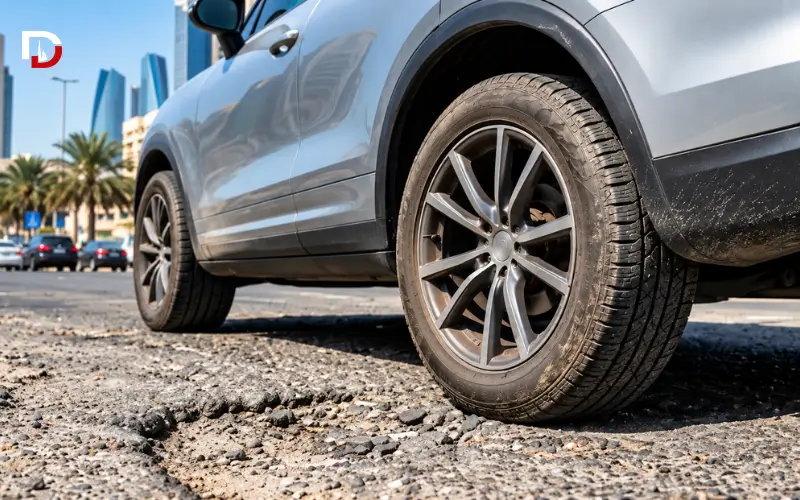
Potholes create sudden impacts that travel through the tyre and wheel. The force can become stronger when a vehicle hits a pothole at higher speed. Luxury cars with large wheels and low-profile tyres may have less sidewall to absorb the impact.
A hard impact can cause a tyre bulge, cut, or internal damage. The wheel itself can also become bent.
Some damage may not be visible immediately, so a car can appear normal while developing vibration or uneven tyre wear later. Checking the tyre and wheel after a strong impact can help prevent further problems.
2. Uneven Roads Put Stress on Suspension Parts
The suspension system absorbs road impacts and keeps the tyres connected to the road. Repeated travel over rough surfaces makes shocks, struts, springs, bushes, and other components work harder.
Wear may appear as extra bouncing, knocking sounds, a rough ride, or less stable handling. Some suspension problems are gradual, so drivers may become used to the change without realizing that the vehicle no longer feels as it should.
If the ride becomes noticeably different, the suspension should be inspected rather than assuming the change is normal.
3. Speed Bumps Can Affect the Underbody
Speed bumps are designed to slow vehicles, but crossing them too quickly can place a strong force through the suspension and underbody. A luxury vehicle with a low ride height may also have less clearance beneath the body.
Repeated impacts can affect lower suspension parts, underbody covers, exhaust components, and other areas beneath the vehicle.
Drivers should reduce speed before crossing a speed bump and avoid sudden braking directly on top of it. If a vehicle makes a scraping or knocking sound after an impact, an inspection can help identify any damage.
4. Road Surfaces Can Affect Wheel Alignment
Wheel alignment controls how the wheels sit and point in relation to the road. Strong impacts from potholes, broken surfaces, or curbs can change alignment settings.
A small alignment problem may cause the car to pull slightly to one side or make the steering wheel sit off-center. It can also cause uneven tyre wear. Drivers may notice these signs more clearly during highway driving.
Checking alignment after a strong road impact or when unusual tyre wear appears can help protect the tyres and maintain stable handling.
5. Tyre Pressure Matters on Rough Roads
Correct tyre pressure helps the tyre absorb road impacts while maintaining its proper contact with the surface. Low pressure can increase sidewall movement and heat, while excessive pressure can make the ride harder and reduce the tyre’s ability to absorb smaller bumps.
Luxury vehicles often use tyres with specific pressure requirements because of their size and handling setup. Drivers should check pressure when the tyres are cold and follow the vehicle maker’s recommendations. Pressure should also be checked before long trips because a heavily loaded vehicle may have different recommended figures.
6. Heat Can Add Stress to Road-Exposed Components
Abu Dhabi’s hot conditions can add another layer of stress to a vehicle. Tyres, brakes, fluids, and cooling systems can all experience higher temperatures during hot weather.
When combined with rough roads or heavy traffic, this can make regular inspections more important.
Tyres should be checked for cracks and unusual wear, while cooling and brake systems should be monitored for changes in performance. Heat does not mean a component will automatically fail, but it can make the condition of already worn parts more important.
7. Dust Can Affect Filters and Moving Parts
Dust and fine particles can enter the vehicle’s operating environment. Air filters help prevent unwanted particles from reaching the engine, while cabin filters help clean air entering the passenger area.
A dirty engine air filter can reduce airflow, while a blocked cabin filter may reduce air conditioning airflow. Dust can also collect around certain mechanical areas.
Filter condition should be checked during routine service instead of replacing parts only because of mileage. Vehicles regularly driven through dusty areas may need closer inspection based on actual conditions.
8. Heavy Traffic Creates Repeated Stop-and-Go Stress
Road conditions are not only about the surface. Traffic patterns also affect long-term vehicle wear. Frequent stops and slow movement place repeated demand on brakes, transmission systems, cooling fans, and the engine.
Luxury vehicles may spend long periods moving slowly while the air conditioner continues running. Brakes also have fewer opportunities to cool when stops happen repeatedly.
Drivers should pay attention to changes in brake feel, transmission response, engine temperature, and air conditioning performance. Regular checks can help identify problems linked to repeated city driving.
Regular Checks Can Protect Long-Term Vehicle Condition
Luxury vehicles often cost more to repair because they use advanced parts and systems. Preventive checks can therefore be useful after repeated exposure to rough roads. A technician can inspect the tyres, wheels, suspension, steering, brakes, and underbody for signs of wear or impact.
For drivers looking for car service in Abu Dhabi, Al Zaabi Autocare can provide vehicle inspections and maintenance. Checking the condition of several connected systems together can make it easier to find the source of a new vibration, noise, or handling change. Early attention may also reduce the chance of secondary damage.
What to Check After a Strong Road Impact?
A hard pothole or road impact does not always create an immediate problem. Some damage becomes clear only after the vehicle has been driven for a while. A quick inspection can help identify warning signs.
Check the following areas:
- Tyre sidewalls for bulges, cuts, or cracks
- Wheel rims for visible bends or damage
- Steering for pulling or unusual vibration
- Suspension for new noises or uneven ride height
- Underbody areas for scrapes or loose covers
- Tyre tread for uneven wear
- Brake behavior for new vibration or noise
If the vehicle feels different after the impact, professional inspection is safer than continuing to drive and waiting for the problem to become obvious.
Also Explore: Sharjah Muroor Traffic Department
Conclusion
Road conditions can have a gradual effect on the long-term condition of luxury vehicles. Potholes, speed bumps, uneven surfaces, heavy traffic, dust, and high temperatures can all add stress to tyres, wheels, suspension, brakes, steering, and other systems.
Driving carefully can reduce some of this stress, but regular maintenance remains important. Checking tyre pressure, wheel alignment, suspension, brakes, filters, and underbody parts can help identify wear early.
When a luxury vehicle starts showing vibration, pulling, unusual noise, or a change in ride comfort, an inspection can help find the cause before the issue becomes more serious.