




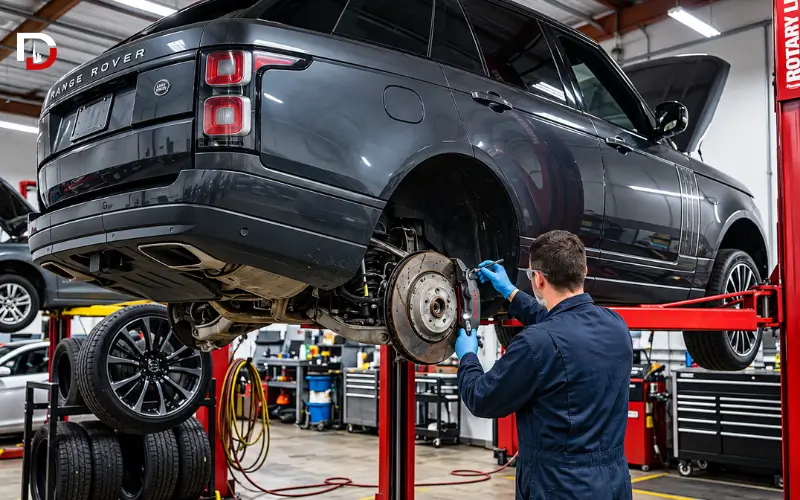

Wheel size and vehicle weight can significantly impact a vehicle’s stopping performance; a heavier vehicle requires greater braking force, while larger wheels can alter the load placed on the braking system.
These factors are particularly significant for large SUVs, which are often equipped with larger wheels, wider tires, and powerful engines. If these components are not properly matched, braking efficiency may decrease, and brake parts may wear out more quickly.
Understanding the relationship between wheel size, vehicle weight, and braking performance helps drivers make better choices and maintain vehicle safety while driving.
Why Vehicle Weight Matters for Braking Performance?
A vehicle’s weight directly affects the demands placed on its braking system; a heavy SUV, for instance, possesses greater moving mass than a small hatchback, requiring more force to slow down or come to a stop. This increased effort generates more heat and can accelerate the wear of brake pads and discs.
Furthermore, the presence of passengers, luggage, or other heavy loads increases the vehicle’s total weight; consequently, large vehicles require braking systems specifically engineered to handle their mass. Regular inspections help ensure that brake pads, discs, calipers, and brake fluid are capable of withstanding these loads.
Key Factors That Influence Braking in Heavy SUVs
1. Heavier Vehicles Create More Braking Energy
Many modern SUVs come equipped with large alloy wheels, which give the vehicle a robust appearance and provide sufficient space to accommodate larger brake components. However, altering wheel size can also impact braking performance.
Larger wheels—especially when paired with wide tires—can increase weight, placing a greater load on the suspension and braking systems; therefore, wheel size should always align with the manufacturer’s specifications.
Furthermore, purely aesthetic modifications can negatively affect vehicle handling, acceleration, braking response, and overall driving balance if the correct wheel and tire combination is not selected.
2. Larger Wheels Can Change Brake Performance
Many modern SUVs come equipped with large alloy wheels, which lend the vehicle a robust appearance and provide sufficient space to accommodate larger braking components. However, altering wheel size can also impact braking performance.
Larger wheels—especially when paired with wide tires—can increase weight, thereby placing a greater load on the suspension and braking systems. Consequently, wheel size should always align with the vehicle manufacturer’s specifications.
Modifications made solely for aesthetic purposes can negatively affect vehicle handling, acceleration, braking response, and overall driving balance if the correct wheel and tire combination is not selected.
3. Bigger Wheels Do Not Always Mean Better Braking
gIt is easy to assume that larger wheels automatically improve braking performance; however, wheel size alone does not determine stopping efficiency. Other components—such as brake discs, brake pad materials, caliper design, tire grip, and electronic braking systems—play crucial roles in this regard.
Some large wheels are designed to accommodate larger brake discs and calipers, which can enhance heat management; nevertheless, the entire braking system must function in harmony and integration.
If wheels are changed without considering the rest of the vehicle, the desired benefit may not be realized; therefore, proper compatibility between the wheels and the braking system is essential to ensure safe performance.
4. Wide Tyres Can Affect Stopping Grip
Wheel size is closely linked to tire size; larger wheels often use wider tires, which can alter the contact patch with the road. High-quality tires—of the correct size and properly inflated—can provide strong grip during braking.
However, tire grip depends on road conditions, tire condition, temperature, and tread depth. A powerful braking system cannot function effectively if the tires fail to maintain contact with the road.
Therefore, drivers should regularly check tire pressure and replace tires when tread depth becomes critically low; additionally, the correct tire specifications must be observed when changing wheel sizes.
5. Heavy SUVs Put More Stress on Brake Pads
Brake pads are among the parts that experience direct wear during every stop. When a heavy SUV brakes, the pads must create enough friction to slow down a large amount of mass.
Frequent city driving can make this wear happen faster because the brakes are used repeatedly. If the pads become too thin, braking performance may change, and the discs can also become damaged.
Drivers should have the pads checked during routine service rather than waiting for grinding sounds. When replacement is needed, brake pad replacement in Dubai should be carried out using parts that match the SUV’s exact specifications.
6. Brake Discs Also Handle Extra Heat
Brake discs work in conjunction with brake pads to slow down the wheels. During braking, the discs heat up due to friction. Heavy vehicles may generate more heat because their braking systems must manage greater amounts of energy.
Larger brake discs are often used in heavy SUVs because they provide a greater surface area for heat dissipation. However, these discs can wear down or become uneven over time.
Drivers may notice steering wheel vibration or a pulsating brake pedal if issues with the discs arise. Periodic inspections help identify scoring, cracks, uneven wear, or excessive loss of disc thickness.
7. Wheel Weight Can Affect More Than Braking
The weight of the wheel and tire assembly can affect various parts of the vehicle; a heavier wheel requires more effort to control while in motion and can impact suspension movement and steering response.
This difference becomes particularly noticeable when all four wheel and tire assemblies are heavier than standard. However, heavy wheels are not necessarily unsafe; the key is ensuring that the entire setup is appropriate for the vehicle.
Therefore, drivers should consider wheel weight, tire size, load rating, and manufacturer recommendations before making any significant modifications.
8. Brake Heat Is Important During Repeated Stops
Heat is a natural byproduct of braking, but excessive heat buildup can reduce braking efficiency. Large four-wheel-drive vehicles can heat up quickly when driving in heavy traffic, on steep inclines, or at high speeds. While larger wheels may accommodate bigger braking systems, the brakes still require time to cool down.
Frequent, heavy braking limits the time available for the braking system to cool. Drivers can minimize heat buildup by maintaining a safe following distance and slowing down smoothly. Periodic brake inspections are also essential for vehicles frequently operated under demanding conditions.
9. Vehicle Load and Wheel Size Work Together
Vehicle weight and wheel size should not be considered in isolation; a heavy 4WD vehicle carrying passengers and luggage places a significant load on the brakes, and if it is also fitted with a heavy wheel and tire package, the overall strain on various vehicle systems can increase further.
For this reason, drivers should select wheels and tires based on the vehicle’s full specifications rather than just appearance; choosing the correct load rating is crucial.
Furthermore, using the appropriate components helps maintain a balance between braking performance, handling, steering, and the suspension system.
Signs That Wheel or Weight Changes May Affect Braking
Drivers should watch for changes after installing larger wheels, wider tyres, or carrying heavier loads. A change in vehicle behavior may point to a problem with the setup or braking system.
Some warning signs include:
- Longer stopping distances
- Steering wheel vibration during braking
- Pulling to one side
- Brake noise
- Uneven tyre wear
- Faster brake pad wear
- A soft or unusual brake pedal
- Increased heat or burning smells after braking
These signs should be checked by a qualified technician. Continuing to drive without finding the cause can lead to more wear or damage.
Read More: Madinat Jumeirah Christmas Market
Final Thoughts
Both wheel size and vehicle weight affect braking performance, particularly in large SUVs. Increased weight means the brakes must manage greater energy, while larger wheels and tires can alter the vehicle’s overall load and maneuverability.
Effective braking performance relies on all system components, including brake pads, discs, calipers, tires, wheels, and electronic braking systems. Selecting the right parts and adhering to a regular maintenance schedule helps ensure safe stopping performance.
Drivers should also immediately address any unusual brake noises, vibrations, or increased stopping distances to prevent more serious issues down the line.